Průvodce zavedením
Hoshin Kanri (nasazení strategie).
Hoshin Kanri, česky nasazení strategie, anglicky policy deployment, je systém řízení. Několik málo průlomových cílů promění v provázané cíle, KPI a iniciativy na každé úrovni závodu a pak je celý rok měsíčně vyhodnocuje. Stojí a padá na dvou číslech a jednom slovese: tři průlomové cíle, ne třicet, a catchball, ne kaskáda rozeslaná e-mailem. X-Matrix je jen záznam té diskuse. Když diskuse neproběhla, je matice jen ozdoba na zdi.
Co je Hoshin Kanri
Hoshin je japonsky střelka kompasu, kanri znamená řízení. Metoda vyrostla z japonského hnutí za kvalitu v šedesátých letech a v angličtině se šíří pod názvem policy deployment nebo strategy deployment, česky jako nasazení či rozvinutí strategie. Když ten slovník odložíte stranou, zbydou tři propojené činnosti: vybrat velmi malý počet průlomových cílů, rozvinout je přes všechny úrovně organizace tak, aby každá úroveň znala svůj měřitelný příspěvek, a celý rok v pevném měsíčním rytmu vyhodnocovat postup.
Směr, rozvinutí, vyhodnocení. To první má většina výrobních firem už dnes: někde existuje prezentace se strategií. Chybí obvykle zbylé dvě třetiny. Strategie zůstane ve vedení, dílna běží na loňských návycích a tento týden hasí požáry, a obojí se potká jednou ročně při rozpočtu. Hoshin Kanri obojí propojí, a to propojení má jméno: catchball. Každá úroveň hodí navržené cíle dolů a úroveň pod ní hodí zpátky, co si vzít dokáže, co ne a co by k tomu potřebovala. Cíle jdou dolů, prostředky a námitky nahoru, a plán se tím mění.
Proto Hoshin Kanri není roční plánovací akce. Když proběhne jednou v lednu, je to rozpočtování s pár kroky navíc. Plán je ta nejlevnější část. Systém dělá měsíční hodnocení: dvanáct měsíců, po které tři čísla nezmizí z kalendáře žádného vedoucího. A slavná X-Matrix, jednostránková mřížka s cíli, iniciativami, KPI a vlastníky, jen zaznamenává diskusi, kterou vedl catchball. Když diskuse neproběhla, je matice jen ozdoba na zdi.
Kde leží v transformační roadmapě
Na roadmapě nasazení TeamGuru je Hoshin Kanri praktika nasazení strategie ve fázi Nastavit rámec. Přichází záměrně až po diagnostice, ne před ní. Průlomové cíle vybrané od boku bývají špatně. Závod, který si prošel toky pomocí mapování hodnotového toku a zavedl důvěryhodná výchozí KPI, vybírá dva až tři průlomové cíle z faktů. Směrem dolů pak nasazené cíle potřebují oporu, a proto hned navazuje denní řízení výroby.
- Předtím Analýza současného stavu
- Předtím Výchozí KPI
- Jste zde Nasazení strategie
- Souběžně Návrh budoucího stavu
- Potom Shop Floor Management
Kdy s tím nezačínat
Hoshin Kanri předpokládá závod, který umí měřit, vybírat a držet rytmus. Tři situace říkají, že ten předpoklad zatím neplatí:
- Neexistuje výchozí měření. Pokud nikdo neumí říct současné OTD, zmetkovitost nebo prostoje číslem, kterému dílna věří, je každý průlomový cíl jen odhad. Nejdřív nasaďte měření, pak strategii.
- Vedení neumí říct ne stávajícím projektům. Hoshin Kanri je hlavně škrtání, jen se tomu říká plánování. Když střet s plánem přežije každý běžící projekt, skončíte u třiceti cílů jako ozdoby na zdi.
- Hašení požárů je tak akutní, že dnešní problémy spolykají každou poradu. Strategie nasazená do chaosu se do úterý vypaří. Nejdřív postavte systém denního řízení: strategii má smysl nasazovat až do stabilního dne.
Ve třetím případě se pořadí obrací úmyslně: nejdřív postavte Shop Floor Management, v USA označovaný jako lean daily management, stabilizujte den a teprve pak nasaďte strategii do systému, který ji udrží. Hoshin nasazený do hašení požárů vyrobí plán, na který nikdo nemá čas, a porady, na které nikdo nepřijde.
Jak vést roční cyklus
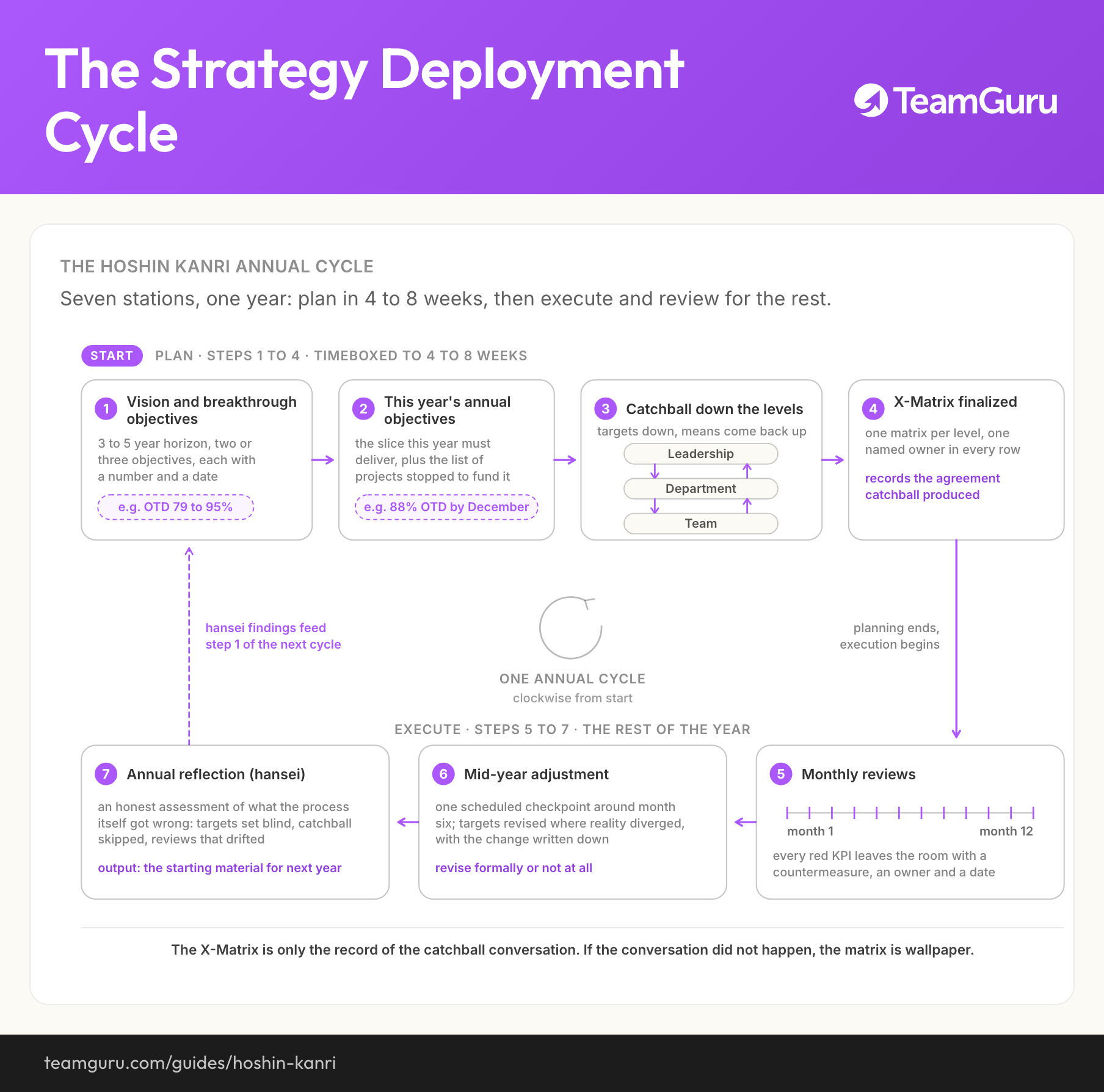
Cyklus níže trvá rok, ale plánování jsou jen kroky 1 až 4 a ty by dohromady neměly přesáhnout 4 až 8 týdnů. Kroky 5 až 7 jsou ta část, kterou většina zavedení vynechá, a zároveň ta část, která rozhoduje, jestli vznikne systém řízení, nebo plakát.
The Hoshin Kanri annual cycle
Seven stations, one year: plan in 4 to 8 weeks, then execute and review for the rest.
| Krok | Kdo se účastní | Výstup |
|---|---|---|
| 1. Stanovit vizi a průlomové cíle | Ředitel závodu a vedení, na základě diagnostiky současného stavu | Dva až tři průlomové cíle s horizontem 3 až 5 let, každý s číslem a datem. Ne témata, ne hodnoty: měřitelné cílové stavy, které podle diagnostiky rozhodují nejvíc. |
| 2. Definovat letošní roční cíle | Vedení, jedno pracovní jednání plus jedna revize | Ke každému průlomovému cíli ta část, kterou musí splnit letošní rok, formulovaná jako měřitelný roční cíl. K tomu písemný seznam projektů, které zastavíte nebo odložíte, aby na roční cíl zbyla kapacita. |
| 3. Catchball napříč úrovněmi | Každý vedoucí se svými přímými podřízenými, úroveň po úrovni, oběma směry | Vyjednané cíle oddělení, KPI a iniciativy. Lidé, kteří mají cíle splnit, čísla zpochybnili, navrhli prostředky a alespoň něco změnili. |
| 4. Dokončit X-Matrix | Vedení plus jeden správce nasazení, který dokument udržuje | Jedna X-Matrix na každou úroveň: propojuje průlomové cíle, roční cíle, iniciativy a KPI a každý řádek má jednoho jmenovitého vlastníka. Matice zaznamenává dohodu, kterou vyjednal catchball. |
| 5. Plnit a každý měsíc kontrolovat | Vlastníci cílů a vedení, měsíčně, s pevným časovým rámcem | Skutečnost KPI proti cíli, ke každé červené hodnotě protiopatření s vlastníkem a termínem, a rozhodnutí: iniciativy odblokované, posílené o zdroje, nebo zastavené. |
| 6. Upravit plán v polovině roku | Vedení, jeden naplánovaný kontrolní bod kolem šestého měsíce | Upravené cíle nebo iniciativy tam, kde se realita rozešla s plánem. K tomu písemná poznámka, co se změnilo a proč, aby roční reflexe měla s čím pracovat. |
| 7. Roční reflexe (hansei) | Všichni, kdo vlastnili nějaký cíl nebo iniciativu | Poctivé zhodnocení toho, co selhalo na procesu samotném: cíle nastavené naslepo, vynechaný catchball, hodnocení, která vyšuměla. Zjištění vstupují do kroku 1 dalšího cyklu. |
Rozhodnutí, která určují podobu cyklu
O tom, jestli sedm kroků vytvoří sladění, nebo papírování, rozhoduje pět voleb:
- Držte hranici tří průlomových cílů. Pokud se čtvrtý zdá nezbytný, nahradí jeden ze stávajících; nepřidává se k nim. Každý přidaný cíl půlí pozornost, která zbude na ostatní.
- Catchball veďte minimálně přes dvě úrovně: vedení závodu s vedoucími oddělení nebo hodnotových toků, pak oddělení s mistry všude tam, kde mistr bude vlastnit nějaké KPI. Níž už cíle přebírá systém denního řízení, ne catchball.
- Celý plánovací cyklus omezte na 4 až 8 týdnů. Catchball zabere přesně tolik času, kolik mu dáte, a plán dokončený v březnu je devítiměsíční plán prodávaný jako roční.
- Sepište seznam toho, co dělat nebudete, a zveřejněte ho spolu s plánem. Kapacitu uvolní teprve chvíle, kdy projekty ke zastavení nebo odložení pojmenujete jménem. Hoshin plán, který nic nezastavuje, jen přidává práci; nasazení strategie to není.
- Jeden jmenovitý vlastník na každý cíl, KPI a iniciativu. Oddělení nemůže vlastnit cíl. Člověk ano.
Rozpad cíle v praxi: jeden průlomový cíl shora dolů
Čísla níže jsou ilustrativní, ale vnitřně konzistentní, a patří stejnému výrobci komponent se 450 zaměstnanci, který se objevuje napříč celou transformační roadmapou: 456 kusů denně přes dělení materiálu, obrábění, svařovnu a montáž, včasnost dodávek zaseklá na 79 procentech. Diagnostika ukázala, kde většina zpožděných dodávek vzniká: v dostupnosti obrobny a v pozdním nakupovaném materiálu. Tady je jeden průlomový cíl sledovaný až dolů, s formulací, která se na každé úrovni mění:
Průlomový cíl, dva roky
Odpovídá: ředitel závodu
Zvýšit včasnost dodávek (on-time delivery, OTD) ze 79 na 95 procent během dvou let.
Jazyk výsledku. Zákazník by takovou větu poznal a žádné jednotlivé oddělení ji nedokáže naplnit samo.
Roční cíl, letošní rok
Odpovídá: výrobní ředitel
Dosáhnout do prosince 88 procent OTD: na polovinu snížit zpoždění dodávek, která způsobuje dostupnost obrobny a pozdní nakupovaný materiál.
Pořád výsledek, ale už pojmenovává dvě příčiny, na které se letošní práce zaměří. Příčiny vyšly z dat o zpožděných dodávkách, ne z názorů.
Cíl oddělení, obrobna
Odpovídá: vedoucí obrobny
Zvýšit dodržování výrobního plánu na obrobně z 81 na 93 procent: neplánované prostoje na dvou úzkoprofilových centrech snížit z 26 na 10 hodin týdně.
Jazyk procesu. Nikdo mimo závod by takovou větu nenapsal, a přesně o to jde: formulace je na každé úrovni konkrétnější, zatímco součet pořád dává průlomový cíl.
Co obrobna skutečně sleduje a řeší
- KPI 1: dodržování výrobního plánu na obrobně, týdně, z 81 na 93 procent do Q4
- KPI 2: neplánované prostoje na centrech 4 a 7, týdně, z 26 na 10 hodin do Q3
- Iniciativa: program plánované údržby na centrech 4 a 7. Vlastník: vedoucí údržby. Prvních 90 dnů rozplánováno, měsíční review.
Všimněte si, co s touto linkou udělal catchball. První návrh dal obrobně cíl 97 procent dodržování plánu. Tým obrobny se vrátil s daty o prostojích a zpožděních: třetina zpoždění začíná pozdním nakupovaným materiálem, který obrobna neovlivní. Výsledek: cíl obrobny se ustálil na 93 procentech, nákup si vzal vlastní nasazený cíl na včasnost dodávek od dodavatelů a roční cíl se přepsal tak, aby pojmenoval obě příčiny. Vyjednáváním se plán stal poctivějším. Ta úprava není slabinou procesu. Je to ten proces.
Obecné pravidlo, které ta linka ukazuje: cíl každé úrovně odpovídá na „jak“ pro úroveň nad sebou a na „proč“ pro úroveň pod sebou. Vrchol rozpadu mluví jazykem zákazníka, spodek jazykem obráběcích center a hodin. Když všechny úrovně rozpadu znějí stejně, žádné nasazení strategie neproběhlo, jen rozeslání.
Rytmus hodnocení
Měsíční hodnocení Hoshin cílů je chvíle, kdy se celý systém vyplatí. Není to porada o stavu, to je jiná káva. Poctivé ho dělají tři pravidla. Zaprvé, podkladem je pracovní záznam: X-Matrix a živé grafy KPI, tedy stejná čísla, jaká vidí dílna, ne slajdy připravené večer předtím. Zadruhé, ke každému KPI pod cílem se rovnou v místnosti určí protiopatření, vlastník a termín. Vysvětlit mezeru ještě neznamená ji odstranit. Zatřetí, hodnocení rozhoduje: iniciativy se odblokují, dostanou zdroje, nebo se zastaví přímo na místě, a rozhodnou to lidé, kteří tam sedí. Hodnocení, které skončí naplánováním dalšího hodnocení, selhalo v jediné úloze, kterou mělo.
Devadesát minut stačí na tři průlomové cíle na úrovni závodu, pokud si vlastníci přinesou aktuální čísla. A stačí jen tak dlouho, dokud cílů zůstane málo. Tento měsíční rytmus se má opřít o existující přezkoumání systému managementu (management review), místo aby běžel vedle ní: zařaďte Hoshin cíle do téže měsíční porady a nezakládejte druhé, konkurenční fórum. Krátkodobé signály nechte na denních a týdenních Tier poradách, ať měsíční hodnocení zůstane u cílů a protiopatření.
Typické chyby
Hoshin Kanri selhává pořád stejně. Téměř všechny ty chyby jsou vidět už během prvních dvou měsíců, když víte, čeho si všímat:
Jak vypadá špatný stav
- Třicet cílů s podcíli a nikdo neodcituje zpaměti ani jeden
- Cíle bez vlastníka, nebo vlastněné oddělením místo konkrétním člověkem
- Divadlo jménem catchball: porady proběhly, ale každé číslo se vrátilo přesně tak, jak šlo dolů
- X-Matrix žije v tabulce jednoho procesního inženýra a nikdo jiný neumí vysvětlit ani jeden její řádek
- Měsíční hodnocení, na kterých se jen prohlížejí grafy, odsouvají těžké body a nerozhodnou nic
Jak vypadá dobrý stav
- Tři průlomové cíle, které odcituje kterýkoli mistr, aniž by se do něčeho díval
- Každý cíl, KPI i iniciativa má jednoho jmenovitého vlastníka
- Catchball na každé úrovni změnil aspoň jeden cíl nebo jednu iniciativu
- Vlastníci si udržují vlastní řádky. Matice se na hodnocení čte, nesestavuje se kvůli němu znovu
- Hodnocení končí rozhodnutími: protiopatření přidělena, iniciativy zastaveny nebo odblokovány
Co bude dál
Odsud pokračují dvě linky. První je pracovní záznam: průvodce X-Matrix popisuje, jak jednostránkový záznam sestavit a číst, a průvodce metodou catchball vede celým vyjednáváním včetně toho, co dělat, když se některá úroveň tvrdě ozve. Druhá linka míří dolů: nasazená KPI se musí propojit s tabulemi, se kterými dílna pracuje každý den, a to je téma stromu KPI (KPI tree) a Shop Floor Managementu. Průlomový cíl, který se nikdy neobjeví na tabuli Tier porady, je cíl, na kterém závod ve skutečnosti nepracuje.
Praktické místo selhání je v obou linkách stejné: vazby mezi cíli, KPI, iniciativami a vlastníky se rozpadnou ve chvíli, kdy začnou žít v oddělených tabulkách. Přesně tady odvádí práci oblast strategické cíle v TeamGuru: propojuje každý cíl s jeho KPI, iniciativami a jmenovitými vlastníky od vedení až po týdenní akce, takže měsíční hodnocení čte živá data, místo aby je někdo dopočítával. Na roadmapě je další praktikou denní řízení výroby: systém, který letošní tři čísla promění v rozhovor každého rána.
Vezměte si s sebou
Diagram z tohoto průvodce jako obrázek, volně použitelný v interních školeních a workshopech.
Stáhnout PNGČasté otázky
Co znamená Hoshin Kanri?
Jaký je rozdíl mezi Hoshin Kanri a OKR nebo MBO?
Kolik cílů má Hoshin plán mít?
Jak dlouho nasazení strategie metodou Hoshin trvá?
Kam až má catchball sahat?
Co dělat, když se v polovině roku změní realita?
Jak to TeamGuru řeší v praxi