Průvodce zavedením
Gemba Walk.
Gemba walk je návštěva vedoucího přímo tam, kde práce skutečně probíhá, aby jí porozuměl vlastním pozorováním a otázkami. Zkoumá proces, nikdy člověka, a ten, kdo jde, se má ptát, ne odpovídat: vyřešit problém na místě vypadá vstřícně, ale nenápadně lidi naučí, že přemýšlet má šéf. Jít se podívat, ptát se proč, projevit respekt, v tomto pořadí.
Co je gemba walk
Gemba je japonské slovo pro skutečné místo: ve výrobě pro místo, kde vzniká hodnota. Gemba walk je návštěva vedoucího na tomto místě, pravidelná a záměrná, aby pozorováním a otázkami pochopil, jak práce skutečně probíhá. Ne jak probíhá podle ERP, ne jak ji popisuje pracovní instrukce, ale co operátor doopravdy dělá v úterý v 9:40, když se zasekne tiskárna etiket.
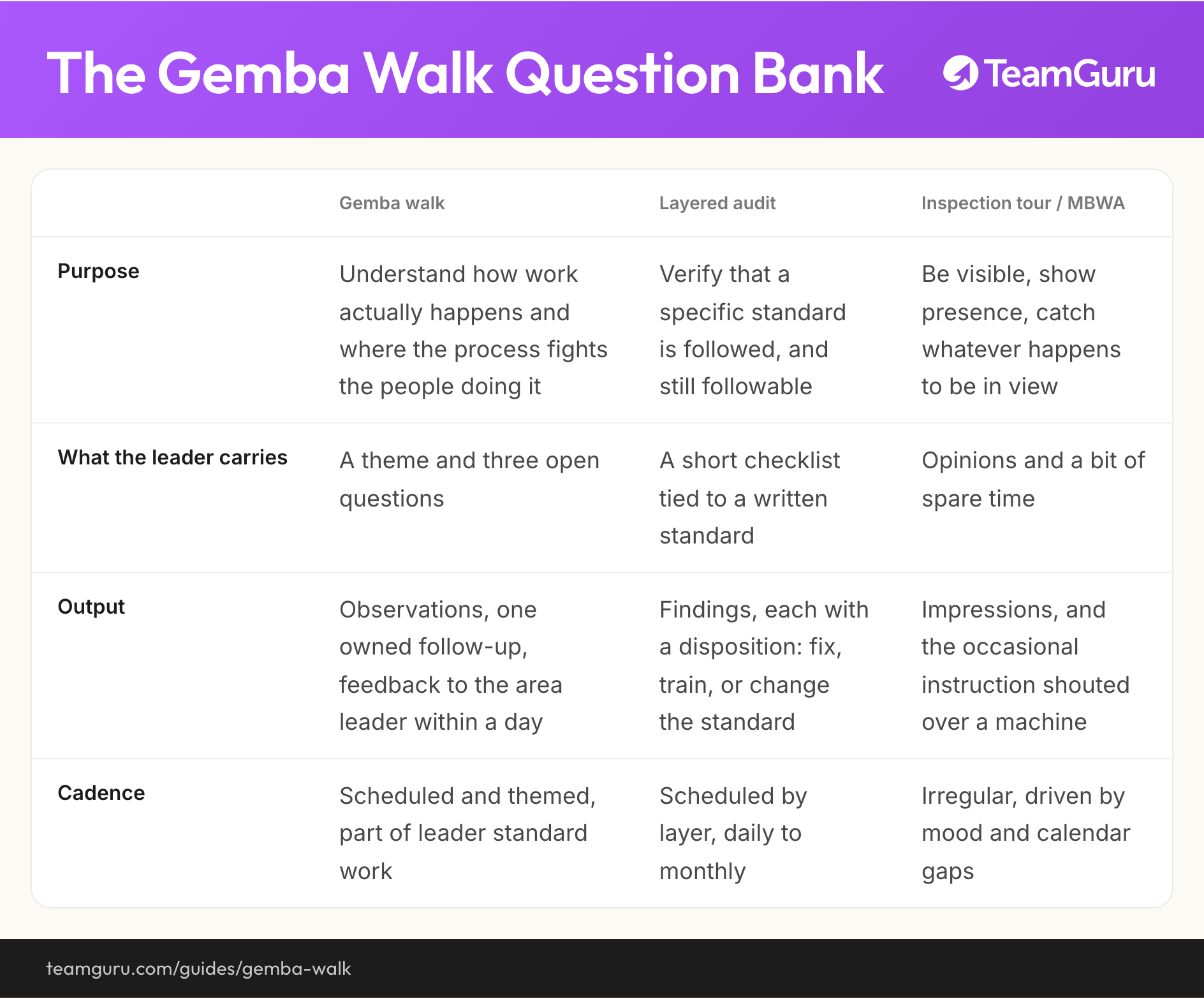
Definice zní samozřejmě, a právě proto se tahle praxe tak často plete s věcmi, které z odstupu vypadají stejně. Walk není audit: audit ověřuje konkrétní standard proti checklistu a vyrábí zjištění. Není to ani kontrolní obchůzka nebo řízení procházením (management by walking around): přítomnost bez metody vyrábí dojmy, ne porozumění. Ve všech třech případech se vedoucí pohybuje po závodě. Liší se tím, s čím tam vedoucí přichází, co z toho vyjde a co se navštívení lidé naučí očekávat.
| Gemba walk | Vrstvený procesní audit | Kontrolní obchůzka / MBWA | |
|---|---|---|---|
| Účel | Pochopit, jak práce skutečně probíhá a kde proces pracuje proti lidem, kteří ho vykonávají | Ověřit, že se konkrétní standard dodržuje a že je vůbec dodržitelný | Být vidět, ukázat přítomnost, zachytit to, co zrovna padne do oka |
| Co si vedoucí bere s sebou | Téma a tři otevřené otázky | Krátký checklist navázaný na psaný standard | Názory a trochu volného času |
| Výstup | Pozorování, jedna akce, kterou si vedoucí vezme za svou, zpětná vazba vedoucímu úseku do jednoho dne | Zjištění, každé s rozhodnutím: opravit, zaškolit, nebo změnit standard | Dojmy a občas pokyn zakřičený přes stroj |
| Frekvence | Naplánovaná a tematická, součást standardizované práce vedoucích | Naplánovaný po úrovních, denně až měsíčně | Nepravidelná, podle nálady a mezer v kalendáři |
První dva sloupce jsou obojí legitimní práce. Škodu působí až jejich míchání: walk, který se potichu změní v audit, naučí lidi, že otevřené otázky jsou past, a audit převlečený za přátelský walk vyrobí zjištění, na jejichž měření nikdo nekývl. Rozhodněte se, co z toho děláte, ještě než odejdete z kanceláře, a nahlas to řekněte, když dorazíte. Tahle stránka je o prvním sloupci.
Kam gemba walk patří v roadmapě transformace
V roadmapě zavedení TeamGuru se gemba walk objevuje dvakrát. Začíná ve fázi Diagnóza jako základní metoda analýzy současného stavu: ještě než někdo vybere cíle zlepšování, projdou vedoucí celý tok, aby viděli, jak závod opravdu běží, souběžně s mapováním hodnotového toku, které z toho vidění dělá změřený obraz. A pak už walky nezmizí. Jakmile běží denní řízení výroby, přesouvají se do standardizované práce vedoucích (Leader Standard Work) jako naplánovaná a kontrolovatelná rutina a zůstávají tam tak dlouho, dokud vedoucí tu práci dělá.
- Jste zde Analýza současného stavu
- Souběžně Mapování hodnotového toku
- Potom Shop Floor Management
- Potom Leader Standard Work
Kdy walk škodí
Chodit se dívat není samo o sobě dobré. Každý walk učí organizaci něco o jejích vedoucích a učí ji to rychle: jedna nedbalá návštěva zničí měsíce poctivě vedených tabulí. Špatně vedený walk je horší než žádný. Takhle vypadá:
- Turistika s rozsudkem. Vedoucí projde úsekem, vynese soud nad tím, co podle jednoho záběru vypadá špatně, a odejde. Úsek se naučí spravovat dojem a příští walk uvidí z pravdy ještě méně.
- Walk s doprovodem. Šest manažerů, každý s deskami, nula naslouchání. S delegací nikdo nemluví upřímně. Pokud jdou víc než dva nebo tři lidé, je to akce, ne walk.
- Seznam úkolů přehozený přes plot. Walk skončí seznamem opatření pro úsek, sepsaným bez úseku a z hodiny kontextu. Lidé, kteří s procesem žijí každý den, dostanou domácí úkol od někoho, kdo se přišel na hodinu podívat.
- Chodit, jen když je něco špatně. Když se vedení objeví na lince až po špatném měsíci, stane se z jeho přítomnosti výstražný signál a každá otázka zní jako obvinění.
Všechny čtyři mají něco společného: zkoumají člověka místo procesu, nebo úseku předají závěry, na kterých se nijak nepodílel. Pokud walk zatím nejde vést bez těchto návyků, opravte nejdřív metodu toho, kdo chodí. Přidávat chození nemá smysl.
Jak walk vést
Walk potřebuje téma, strukturu a kázeň v čase. Téma zužuje to, co hledáte, protože hledat všechno znamená nevidět nic. Dobré téma je široké přesně na jednu optiku: jeden druh plýtvání ze sedmi druhů plýtvání, kdy celý walk sledujete jen zásoby nebo jen čekání; jeden standard, kdy na dvou nebo třech pracovištích porovnáváte skutečnou práci s listem standardizované práce; nebo jeden tok, kdy sledujete jednu zakázku či jeden díl od dveří ke dveřím a zapisujete každé čekání a každou předávku.
Karta průběhu walku
Karta níže je celá metoda na jedné stránce. Vytiskněte si ji, složte a vezměte s sebou.
| Fáze | Co dělat |
|---|---|
| Před walkem, 10 minut | Vyberte téma a trasu se dvěma až čtyřmi zastávkami. Nejdřív si přečtěte tabuli úseku: včerejší čísla, otevřené eskalace, běžící problémy, aby otázky začínaly tam, kde tým už je. Vedoucímu úseku řekněte, že přijdete a s jakým tématem. |
| Během walku, 30 až 45 minut | Na každé zastávce nejprve sledujte jeden celý pracovní cyklus, než cokoli řeknete. Pak položte tři otázky z banky, poslouchejte a zapište si, co jste viděli a co jste slyšeli. Poznamenejte si, co je potřeba dořešit, ale na místě nikomu nic nepřidělujte. |
| Po walku, do jednoho dne | Vyberte jednu akci, kterou převezmete osobně, a udělejte ji. Vedoucímu úseku dejte do jednoho dne zpětnou vazbu: co jste viděli, co jste se dozvěděli, co uděláte. Žádné rozsudky mezi dveřmi, žádné překvapivé seznamy úkolů, které dorazí e-mailem. |
Nejméně přirozená část je stát na místě. Instinkt na walku velí jít dál, protože pohyb působí produktivně a stání trapně. Taiichi Ohno proslule nechával své žáky stát v křídou nakresleném kruhu na podlaze tak dlouho, dokud nedokázali popsat, co se kolem nich doopravdy děje. Křídu ani ty hodiny nepotřebujete, ale princip ano: letmý pohled zachytí jeden snímek a snímky vypadají skoro vždycky v pořádku. Teprve celý cyklus, ideálně dva nebo tři, ukáže variabilitu: sáhnutí, které je pokaždé jiné, třetí pokus nasadit fitink, chůzi pro věc, která má být po ruce. Když máte 30 minut, tři pořádně odsledované zastávky vydají za deset zastávek, kterými jen projdete.
Ptát se bez soudů
Banka otázek níže je uspořádaná podle záměru. Vyberte si na jeden walk tři otázky, které sedí k vašemu tématu, a nechte čas odpovědím: tři otázky, u kterých jste opravdu poslouchali, naučí víc než deset položených při pohledu do telefonu. Nesbíráte odpovědi, které budete známkovat. Učíte se, jak proces vypadá zevnitř.
| Záměr | Otázky na výběr |
|---|---|
| Porozumění práci |
|
| Standardy |
|
| Problémy |
|
| Zlepšování |
|
Za to, jak otázka zapůsobí, odpovídá ten, kdo se ptá, ne ten, kdo poslouchá. Stejná slova mohou být zvědavost i výslech podle tónu a rozdíl v postavení zesiluje všechno, co manažer na lince řekne. Většinu pokryjí dvě pravidla. Za prvé, ptejte se na proces, nikdy na člověka: co dělá tenhle krok pomalým, ne proč jste pomalí vy. Za druhé, když vám někdo ukáže problém, viditelně mu poděkujte, pokaždé. Ukázaný problém je projev důvěry a jedna špatná reakce na špatnou zprávu vás může stát rok upřímných odpovědí.
Frekvence podle úrovně
Frekvence jde ruku v ruce s úrovní: čím blíž k dílně, tím kratší a častější walk. Vzorec níže sedí na středně velký závod; čísla si upravte, poměry nechte.
| Úroveň | Frekvence | Délka | Typické zaměření |
|---|---|---|---|
| Mistr na směně | Denně | 10 až 15 minut | Vlastní úsek: tabule, jeden pozorovaný standard, včerejší odchylky |
| Vedoucí úseku nebo hodnotového toku | Týdně | 30 až 45 minut | Jedno téma napříč úsekem, střídavě: jeden druh plýtvání, jeden standard, jeden tok |
| Vedoucí závodu | Týdně | 45 až 60 minut | Tematický walk jedním úsekem s celými odsledovanými cykly, plus tabule Tier |
| Vedení firmy a návštěvy z centrály | Měsíčně | 60 až 90 minut | Skutečný walk s vedoucím závodu: jeden tok sledovaný od začátku do konce, ne obchůzka po chodbách |
Aby cokoli z toho přežilo špatný kvartál, je potřeba to zapsat do standardizované práce vedoucích: walk se stane naplánovanou rutinou na kartě vedoucího, jeho splnění je vidět a vynechaný walk je odchylka, která se probírá jako každý jiný nesplněný standard. Walky, které žijí jen v dobrých úmyslech, umřou v prvním našlapaném týdnu.
Časté chyby
Programy gemba walků málokdy selžou hlasitě. Vyšumí, a to čtyřmi předvídatelnými způsoby. Ke každému existuje protiopatření a funguje líp jako trvalé pravidlo než jako připomínka.
Walk se ruší jako první
Pod tlakem je walk to nejsnadnější, co jde v kalendáři zrušit, a všichni to vidí. Rušení walků v krizi učí závod, že chodit se dívat je aktivita pro dobré časy, což je přesně obráceně: právě v krizi na realitě záleží nejvíc. Chraňte ten termín jako návštěvu zákazníka, a když se opravdu musí posunout, jděte na kratší walk, ne na žádný.
Poznámky, které nikam nevedou
Pozorování se hromadí v zápisníku, který nikdo, ani sám autor, znovu neotevře. Lidé, kteří odpovídali na otázky, se nikdy nic nedozví, uzavřou, že walk bylo divadlo, a začnou odpovídat divadelně. Protiopatření je malé a přísné: jedna vlastní akce z každého walku, uzavřená a nahlášená zpět, a každé další dořešení předané do kanálu, který má vlastníka.
Řešení na místě
Služebně starší člověk uvidí problém, zná odpověď a dá ji. Vypadá to jako vedení a funguje to přesně jednou. Tým se naučí, že přemýšlet má šéf, počká na příští návštěvu, a řešení postavené na deseti minutách kontextu obvykle vyrobí další problém. Zeptejte se, co by zkusil tým, a koučujte až potom, přes vedoucího úseku. Jediná výjimka je bezpečnost: nebezpečný stav walk zastaví a řeší se hned.
Vyleštěná trasa
Stejná trasa, stejný den, stejná hodina, každý týden. Do měsíce je trasa nachystaná: úsek před vámi se uklízí, zatímco parkujete. Střídejte trasu i hodinu, sledujte díl místo chodby a k bezvadně vypadajícímu pracovišti přistupujte s podezřením. Gemba, která vypadá dokonale, své problémy někam schovala.
Co následuje
Walk vyrábí surovinu pro tři systémy a vyplatí se říct nahlas, které pozorování patří kam. To, co jste se dozvěděli o skutečném chodu závodu, jde do analýzy současného stavu a do priorit, které z fáze Diagnóza vyjdou. Nápady na zlepšení od operátorů patří do kaizenu se jménem autora, ne do vašeho zápisníku. Z odchylek od standardu se stane buď zaškolení, nebo změna standardu přes standardizovanou práci, a opakující se problémy dostanou pořádné 5x proč přímo v procesu místo diagnózy na chodbě.
Programy walků se nejčastěji rozpadnou právě na evidenci: dořešení slíbená na lince a zapomenutá v kanceláři. Přesně tuhle část TeamGuru dostává do provozu: ze zjištění z walku se stanou akce s vlastníkem a termínem v řízení projektů a akcí a opakované tematické walky běží jako naplánované checklisty a audity, takže splnění, zjištění i fotky žijí na jednom místě a zpětná vazba do úseku se uzavírá viditelně, ne na dobré slovo.
V roadmapě se to, co walky odhalí během fáze Diagnóza, stává výchozím bodem pro denní řízení výroby: pro tabule a Tier porady, které z vidění problémů dělají jejich každodenní řízení. Jakmile tenhle systém běží, mění walk charakter: z diagnostické výpravy se stává standardní práce vedoucího a v té roli už zůstane.
Vezměte si s sebou
Diagram z tohoto průvodce jako obrázek, volně použitelný v interních školeních a workshopech.
Stáhnout PNGČasté otázky
Co znamená slovo gemba?
Jaký je rozdíl mezi gemba walkem a auditem?
Jak dlouho má gemba walk trvat a jak často?
Mají se gemba walky ohlašovat?
Co mám dělat s pozorováními z walku?
Dají se walky chodit i v administrativě a podpůrných úsecích?
Jak to TeamGuru řeší v praxi