Průvodce zavedením
8D report.
8D report je týmový standard řešení problémů opřený o důkazy, určený pro případ, kdy se vada dostala k zákazníkovi. Devět disciplín vede od okamžité reakce (D0) přes zajištění, ověřenou kořenovou příčinu a validovanou nápravu až po prevenci a ocenění týmu (D8). O kvalitě reportu rozhoduje D2, popis problému: co, kde, kdy, kolik a čeho se problém netýká. Co neumíte přesně popsat, neumíte vyřešit. Zákazník navíc čte 8D report jako vzorek toho, jak přemýšlí celý váš závod.
Co je 8D report
8D znamená eight disciplines, tedy osm disciplín. Je to strukturovaná metoda řešení problémů stavěná na situaci, kdy se vada dostala k zákazníkovi. Je týmová: jmenovaný mezioborový tým, ne jeden technik se šablonou. Je určená zákazníkovi: vzniká z ní report, který zákazník čte, hodnotí a často audituje. A stojí na důkazech: každé tvrzení v ní, od množství při třídění přes kořenovou příčinu až po validaci, musí stát na něčem, co se spočítalo, otestovalo nebo reprodukovalo.
V českých zdrojích potkáte i názvy „metoda 8D“, normativní „řešení problémů v 8 disciplínách“ (VDA, Česká společnost pro jakost) nebo překlad „8D zpráva“; v provozu se ale mluví o 8D reportu a tenhle průvodce zůstává u něj. Fordova rozšířená varianta nese označení G8D.
Formát se standardizoval u Fordu v 80. letech a rozšířil se automobilovým dodavatelským řetězcem, kde ho zákaznické příručky kvality dodnes u reklamací předepisují. Dávno přešel i do jiných oborů: elektronika, zdravotnické prostředky, letectví i obecná výroba používají 8D nebo jeho blízkého příbuzného. Základní logika totiž na autech nezávisí: rychle zajistit, přesně popsat, dokázat příčinu, dokázat nápravu, zabránit opakování.
Ještě jedna věc, než přijde mechanika: zákazník čte váš 8D report jako vzorek toho, jak přemýšlí celý váš závod. Mlhavé D2, neověřené D4 a prázdné D7 mu o vašem provozu řeknou víc než jakýkoli audit, protože tohle je vaše řešení problémů pod tlakem. Za to se vyplatí utratit technické hodiny. A proto je nejhorší, co s 8D reportem můžete udělat, brát ho jako formulář k vyplnění.
Kde 8D stojí v žebříčku řešení problémů
Na roadmapě zavedení TeamGuru patří 8D do praktiky strukturovaného řešení problémů ve fázi Denní řízení a je formálním koncem žebříčku. Ten vede od 5x proč u odchylek řešených týž den přes A3 report u chronických interních problémů, které stojí za týdny zkoumání, až k 8D reportu, když je ve hře zákazník a analýza musí obstát ve vnějším přezkoumání. Základní disciplínou všech tří je táž logika analýzy kořenových příčin a nápravných opatření (RCCA); 8D k ní přidává mandát týmu, hodiny běžící na okamžitá opatření a místo úniku.
- Předtím Shop Floor Management
- Jste zde Strukturované řešení problémů
- Potom Kaizen
- Potom Obeya a přezkoumání vedením
Kdy je 8D report povinný a kdy je volbou
U zákaznických reklamací a úniků si otázka odpovídá sama: příručka kvality dodavatele 8D report předepisuje, stanoví termíny a často i portál, kterým se má odevzdat. Berte ta pravidla termínů jako smluvní, protože fakticky smluvní jsou.
Interně je 8D volba a měla by být střídmá: plný formát si nechte na velké problémy, na úniky s dopadem na bezpečnost zachycené až na finálním testu nebo na opakované poruchy, které přešly přes hranice oddělení. Nedělejte 8D report na každý škrábanec. Únava z formátu je reálná a zabíjí kvalitu: závod, který napíše čtyřicet rutinních 8D reportů měsíčně, napíše čtyřicet mělkých. Znaky, že plný 8D report je špatný nástroj:
- Jednorázová interní odchylka se známou příčinou a triviální nápravou. Opravte ji, zapište a jděte dál. 8D report je tady jen převlek za papírování.
- Chronický interní problém, který si žádá týdny zkoumání, ale nemá zákazníka. To je území A3: stejná přísnost, lehčí formát, stavěný pro koučování.
- Problém, kde je řešení už známé a zbývá ho jen provést. To je projekt s úkoly a termíny, ne vyšetřování.
- Každý škrábanec a kosmetická vada automaticky. Když je 8D reportem všechno, vaši technici se naučí psát je rychle místo dobře, a reporty, které zákazníci opravdu čtou, budou psané ve stejném unaveném stylu.
Devět disciplín, D0 až D8
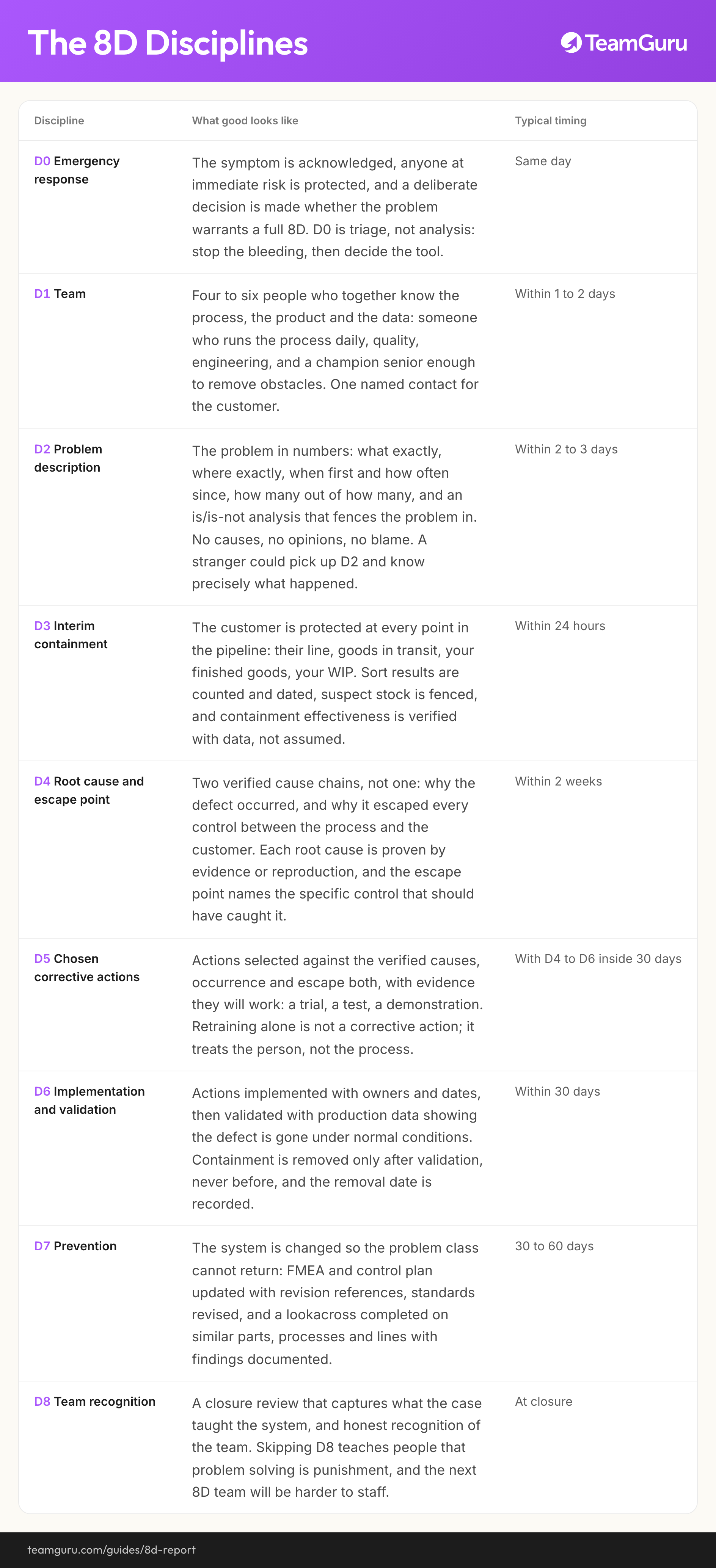
Sloupec s termíny odráží běžná očekávání zákazníků, hlavně v automotive: zajištění do 24 hodin, kořenová příčina až po validaci do 30 dnů. Jsou typická, ne univerzální, takže si ověřte příručku každého zákazníka. Univerzální je pořadí: zajištění před analýzou, ověřená příčina před opatřeními, validace před uzavřením.
| Disciplína | Jak vypadá dobře odvedená | Typický termín |
|---|---|---|
| D0 Okamžitá reakce | Symptom je potvrzený, každý, kdo je bezprostředně ohrožený, je chráněný, a padne vědomé rozhodnutí, jestli si problém plný 8D report zaslouží. D0 je triáž, ne analýza: nejdřív zastavte krvácení, pak vybírejte nástroj. | Ještě týž den |
| D1 Tým | Čtyři až šest lidí, kteří dohromady znají proces, produkt i data: někdo, kdo proces denně řídí, kvalita, technika a champion dost vysoko na to, aby odstraňoval překážky. Jeden jmenovaný kontakt pro zákazníka. | Do 1 až 2 dnů |
| D2 Popis problému | Problém v číslech: co přesně, kde přesně, kdy poprvé a jak často od té doby, kolik kusů z kolika, plus analýza „je / není“, která problém ohraničí. Žádné příčiny, žádné názory, žádné hledání viníka. Cizí člověk vezme D2 do ruky a přesně ví, co se stalo. | Do 2 až 3 dnů |
| D3 Okamžitá opatření | Zákazník je chráněný v každém bodě řetězce: jeho linka, zboží na cestě, váš sklad hotových výrobků, vaše rozpracovaná výroba. Výsledky třídění jsou spočítané a datované, podezřelé zásoby jsou zablokované a účinnost opatření je doložená daty, ne předpokládaná. | Do 24 hodin |
| D4 Kořenová příčina a místo úniku | Dva ověřené řetězce příčin, ne jeden: proč vada vznikla a proč prošla všemi kontrolami mezi procesem a zákazníkem. Každá kořenová příčina stojí na důkazu nebo na reprodukci a místo úniku pojmenovává konkrétní kontrolu, která ji měla zachytit. | Do 2 týdnů |
| D5 Volba nápravných opatření | Opatření vybraná proti ověřeným příčinám, vzniku i úniku, s důkazem, že zaberou: zkouška, test, demonstrace. Samotné přeškolení nápravné opatření není; léčí člověka, ne proces. | S D4 až D6 do 30 dnů |
| D6 Zavedení a validace | Opatření zavedená s vlastníky a termíny, pak ověřená výrobními daty, která ukazují, že vada za běžných podmínek zmizela. Okamžitá opatření se ruší až po validaci, nikdy dřív, a datum zrušení se zapíše. | Do 30 dnů |
| D7 Prevence | Systém se změní tak, aby se celá třída problému nemohla vrátit: aktualizovaná FMEA a plán kontroly a řízení s odkazem na revizi, přepsané standardy a dokončený lookacross na obdobné díly, procesy a linky se zdokumentovanými zjištěními. | 30 až 60 dnů |
| D8 Ocenění týmu | Uzavírací přezkoumání, které zachytí, co případ naučil systém, a poctivé ocenění týmu. Vynechané D8 učí lidi, že řešení problémů je trest, a další 8D tým se bude obsazovat hůř. | Při uzavření |
Jak vést 8D report, který obstojí
Většina disciplín je samovysvětlující, jakmile tabulku výše vezmete vážně. Čtyři z nich rozhodují, jestli report obstojí, a zaslouží si detail níže.
D2 rozhoduje o celém reportu
O kvalitě 8D reportu se rozhoduje v D2. Slabý popis problému vyrobí D4 psané odhadem: řetězec příčin nikdy nebude ostřejší než následek, který vysvětluje. Investujte čas sem: co přesně je špatně, měřitelně; kde přesně, až na pozici a znak; kdy to začalo a jak se výskyt vyvíjí; kolik kusů z kolika, s čísly dílů a rozsahy šarží nebo sériových čísel.
Pak problém ohraničte analýzou „je / není“. Ilustrativní případ ze závodu na komponenty se 456 kusy denně, který v těchto průvodcích slouží jako příklad: zákazník hlásí netěsná hydraulická šroubení. Slabé D2 říká „šroubení u zákazníka teče, prošetřujeme“. Silné D2 říká: prosakování jen na levém přípojném šroubení, 7 potvrzených kusů z 3 400 dodaných od 10. června, všechny ze šarží obrobených na lince 2 po výměně nástroje, žádný z linky 1, žádný na pravém přípoji obráběném na stejném stanovišti starším nástrojem. Ten jediný odstavec už udělal polovinu práce D4: „je / není“ ukazuje přímo na výměnu nástroje na lince 2 a tým může jít ověřovat místo hádat. Příčiny do samotného D2 nepatří; ve chvíli, kdy se v popisu objeví podezřelá příčina, tým přestane popisovat a začne obhajovat.
D4 potřebuje dva řetězce, ne jeden
Každá zákaznická reklamace jsou dvě selhání. Vada vznikla a pak prošla všemi kontrolami mezi vaším procesem a rampou zákazníka. D4 proto vede dva řetězce příčin. Řetězec vzniku se ptá, proč se vada vyrobila, a disciplinovaná analýza 5x proč s každou odpovědí ověřenou přímo v procesu je na to obvykle správný nástroj. Řetězec úniku se ptá, proč ji nikdo nezachytil, a končí v místě úniku: u konkrétní kontroly, tedy kontroly kvality, testu nebo poka-yoke, která vadu měla odhalit a neodhalila, nebo u poctivého přiznání, že žádná taková kontrola neexistovala.
Oba řetězce končí ověřením, ne shodou. Standard důkazu, který stojí za to držet: dokážete vadu vyvolat a zase odstranit tím, že příčinu zapnete a vypnete, nebo máte fyzický důkaz, který přežije skeptické čtení. Kořenová příčina odhlasovaná v zasedačce je hypotéza v obleku.
D5 a D6: nejdřív to dokažte, pak to tvrďte
Nápravná opatření volte proti oběma ověřeným příčinám: jedna sada zastaví vznik, druhá uzavře únik. Volbu ověřte ještě před plným zavedením: zkušebním provozem, testovacím přípravkem nebo záměrným pokusem novou kontrolu obejít. Pak v D6 validujte výrobními daty: bezvadné kusy za běžných podmínek a v množství, které něco znamená. Teprve potom zrušte okamžitá opatření a ověřte, že výroba zůstane čistá. Uzavřít 8D report na „opatření zavedena“ bez validačních dat je nejčastější zkratka a přesně na ni si posvítí dobrý SQE na straně zákazníka.
D7 je prevence a prevence znamená lookacross
D7 se ptá, co v systému tenhle problém umožnilo, a opravuje to právě tam: FMEA dostane nový způsob poruchy nebo opravené hodnocení, plán kontroly a řízení dostane novou kontrolu, dotčené standardy se přepíšou, všechno s odkazy na revize, které si zákazník může auditovat. Pak přijde lookacross: každý obdobný díl, proces a linka se do několika dnů, ne čtvrtletí, prověří proti stejnému způsobu poruchy a zjištění se zapíšou, i když jsou čistá. D7, které říká „FMEA aktualizována“ bez čísla revize a bez seznamu prověřených procesů, je slib, ne disciplína.
Checklist schvalovatele
Report někdo před odesláním zákazníkovi podepisuje a ten podpis by měl něco znamenat. Tyhle otázky si projděte disciplínu po disciplíně, než report uvolníte. Když odpověď chybí, report není pozdě kvůli schvalovateli. Je brzy.
| Disciplína | Zeptejte se před uvolněním |
|---|---|
| D1: Tým | Je v týmu někdo, kdo proces denně řídí? Je champion dost vysoko na to, aby uvolnil lidi i peníze? Je jmenovitě určený jeden kontakt pro zákazníka? |
| D2: Popis | Jsou co, kde, kdy a kolik uvedené v číslech, s čísly dílů a rozsahy sériových čísel nebo šarží? Je tam analýza „je / není“? Vyhýbá se popis jmenování jakékoli příčiny? Udělal by si někdo mimo závod stejnou představu jen z této stránky? |
| D3: Okamžitá opatření | Jsou pokrytá všechna místa: linka zákazníka, přeprava, sklad hotových výrobků, rozpracovaná výroba? Jsou množství a výsledky třídění spočítané a datované? Souhlasil by zákazník, že je chráněný dnes, ne příští týden? |
| D4: Kořenová příčina | Jsou tam dva řetězce, vznik a únik? Byla každá kořenová příčina ověřená zapnutím a vypnutím, reprodukcí vady nebo tvrdým důkazem, a ne hlasováním v zasedačce? Pojmenovává místo úniku konkrétní kontrolu, která selhala? |
| D5: Volba opatření | Míří každé opatření na ověřenou příčinu? Nestojí některé opatření jen na přeškolení nebo na připomenutí lidem? Existuje důkaz, zkouška nebo test, že zvolená opatření skutečně zaberou? |
| D6: Validace | Jsou k dispozici výrobní data před a po, ne jen konstatování, že opatření jsou hotová? Byla okamžitá opatření zrušená a zůstala vada pryč i po jejich zrušení? Kolika kusy nebo dny čisté výroby je to tvrzení podložené? |
| D7: Prevence | Jsou aktualizace FMEA a plánu kontroly a řízení uvedené číslem revize? Je lookacross na obdobné díly a linky zdokumentovaný s vlastníky a termíny, ne jen slíbený? Prověřil se některý sesterský proces a našel něco? |
| D8: Uzavření | Prošel tým to, co případ odhalil o systému, ne jen o dílu? Poděkoval někdo týmu tak, aby si toho tým všiml? |
Komunikace se zákazníkem
Průběžná odpověď včas pokaždé porazí dokonalou odpověď pozdě. Tým kvality na straně zákazníka drží vaše díly a cizí výrobní plán. První den nepotřebuje kořenovou příčinu, ale důkaz, že je chráněný, a termín další zprávy. Pošlete D1 až D3, když mají být, i když je D4 zatím hypotéza. Označte ji jako hypotézu a dodržte každý slíbený termín. Dodavatel, který komunikuje podle plánu s dílčími odpověďmi, si buduje důvěru; dodavatel, který na tři týdny zmizí a vrátí se s vyleštěným reportem, ne.
Okamžité opatření pojmenujte poctivě. Když je průběžným opatřením stoprocentní vizuální třídění, napište „stoprocentní vizuální třídění“ a jeho naměřenou účinnost, ne „zpřísněná kontrola“. Když certifikované zboží dorazí k zákazníkovi za čtyři dny, napište čtyři dny. Zákazníci odpustí vadu mnohem snáz než zjištění, že tvrzení o zajištění bylo optimistické, protože to první je selhání procesu a to druhé selhání charakteru. Držte jeden hlas: veškerou komunikaci vede kontakt pro zákazníka určený v D1, aby zákazník nikdy neslyšel dvě verze téhož stavu.
Časté chyby v praxi
Za většinu špatných 8D reportů můžou čtyři vzorce a všechny čtyři jsou pro zákazníka viditelné.
D4 psané tak, aby dobře znělo
Kořenová příčina se formuluje pro přijetí u zákazníka, ne pro pravdu: věrohodná, obecná a neověřená. Test je jednoduchý: dokážete příčinu zapnout a vypnout tak, aby se vada objevila a zase zmizela? Pokud ne, je řetězec vyprávění. Zákazníci, kteří čtou 8D reporty po desítkách, ten žánr poznají okamžitě, a stojí vás víc důvěryhodnosti než report odevzdaný pozdě.
Z okamžitého opatření se stane řešení
Stoprocentní třídění se tiše změní v trvalé, případ se uzavře a za půl roku platí závod dva kontrolory na směnu za to, že problém neřeší. Okamžité opatření je škrtidlo. Pokud D3 stále běží ve chvíli, kdy se má validovat D6, 8D report se zastavil, a říct to má kalendář, ne report.
D7 vynechané nebo předstírané
V reportu stojí „FMEA aktualizována“ bez čísla revize a lookacross je jedna věta, ne seznam. Za osm měsíců se stejný způsob poruchy objeví na sesterském dílu a druhý 8D report se píše podstatně hůř, protože první otázka zákazníka zní, proč to vaše vlastní prevence nezachytila.
8D jako trest
Report dostane ten, kdo je označený za viníka, píše ho sám po večerech a přezkoumává se jako domácí úkol. Kvalita se sype, protože celá metoda počítá s týmem a s důkazy. Když vaši technici při slově 8D obrátí oči v sloup, formát se zneužívá a náprava je v chování managementu, ne v další šabloně.
Co následuje
Uzavřený 8D report jsou data, ne jen úleva. Sledujte opakování napříč případy: podíl opakovaných problémů je poctivý ukazatel celého systému řešení problémů. A shluky příbuzných případů nasměrují zásobník zlepšení na ty rodiny procesů, které potřebují přezkoumat FMEA, dodělat chybuvzdornost nebo přepracovat v praktice kaizen. Chronické interní problémy, které případy pořád odhalují, unese v lehčím formátu a bez zákaznické režie A3 report. A průvodce analýzou kořenových příčin (RCCA) pokrývá kontroly účinnosti, které udrží každé uzavření poctivé.
Praktickým úzkým místem ve většině závodů není metoda, ale sestavení reportu: důkazy v e-mailových vláknech, počty z třídění v tabulkách, fotky v telefonech a technik, který to všechno ve 21:00 před termínem zákazníka skládá do dokumentu. Právě tady má TeamGuru svoje místo: workflow 8D řešení problémů vede disciplíny jako kroky s důkazy, vlastníky a termíny u každého z nich a alerty kvality propojují původní únik s korektivními akcemi na dílně. Report, který zákazník dostane, pak vznikne jako vedlejší produkt práce zaznamenané ve chvíli, kdy probíhala. A přesně téhle verzi příběhu uvěří i auditor.
Vezměte si s sebou
Diagram z tohoto průvodce jako obrázek, volně použitelný v interních školeních a workshopech.
Stáhnout PNGČasté otázky
Jakých je 8 disciplín procesu 8D?
Kdy se používá D0?
Jak rychlý musí 8D report být?
Jaký je rozdíl mezi 8D, A3 a RCCA?
Kdo má být v 8D týmu?
Co je v 8D reportu místo úniku?
Jak to TeamGuru řeší v praxi