Průvodce zavedením
Metoda 5S.
Metoda 5S organizuje pracoviště v pěti krocích: vytřídit, uspořádat, uklidit, standardizovat a trvale udržovat. Cíl je jediný: aby byla každá odchylka vidět během několika sekund, ať jde o chybějící nástroj, únik oleje, nebo přebytečnou zásobu. Není to úklidový program. První čtyři kroky zaberou pár týdnů, pátý rozhoduje o všem a je to chování vedoucích, ne skóre auditu. 5S přežije jen tehdy, když denní tříminutové kontroly a týdenní audity vedoucích stojí ve standardizované práci vedoucích.
K čemu 5S doopravdy je
Metoda 5S se obvykle uvádí jako úklid a pořádek a přesně tohle zarámování ji zabíjí. Uklizené pracoviště je vedlejší efekt. Skutečným produktem 5S je pracoviště, kde je odchylka vidět během několika sekund: nástroj chybějící ve svém obrysu, hydraulický únik na jinak čisté podlaze, paleta přebytečné zásoby stojící mimo vyznačený čtverec. V zaneseném úseku existují tytéž signály, ale jsou neviditelné, pohřbené pod šumem věcí, které tam byly odjakživa.
Ta viditelnost má reálnou cenu. Chybějící nástroj objevený na začátku přetypování místo uprostřed něj, únik zachycený, dokud je to kapání a ne havárie ložiska, rozpracovaná výroba, která se nemůže tiše hromadit, protože prostor pro ni je konečný a vyznačený. 5S je fyzická vrstva vizuálního řízení: dělá normální stav tak zřejmým, že se každá odchylka od něj sama ptá.
Proto celou metodu nese páté S. Vytřídit, uspořádat, uklidit a zdokumentovat jsou projekty; ty zvládne udělat jednou kdokoli. Trvalé udržování je chování vedoucích, pár minut kontroly a koučování opakovaných denně a týdně, a je to jediný krok, který nejde delegovat na startovní týden. Většina programů 5S neselže v prvním kroku. Dokončí čtvrtý krok a zjistí, že pátý nikdo nenaplánoval.
Pět S krok za krokem
Každý krok má vytvořit něco konkrétního a každý má jednu chybu, na kterou padá většina jeho selhání. Když výstup kroku neexistuje, krok se nestal, ať byl ten týden jakkoli rušný.
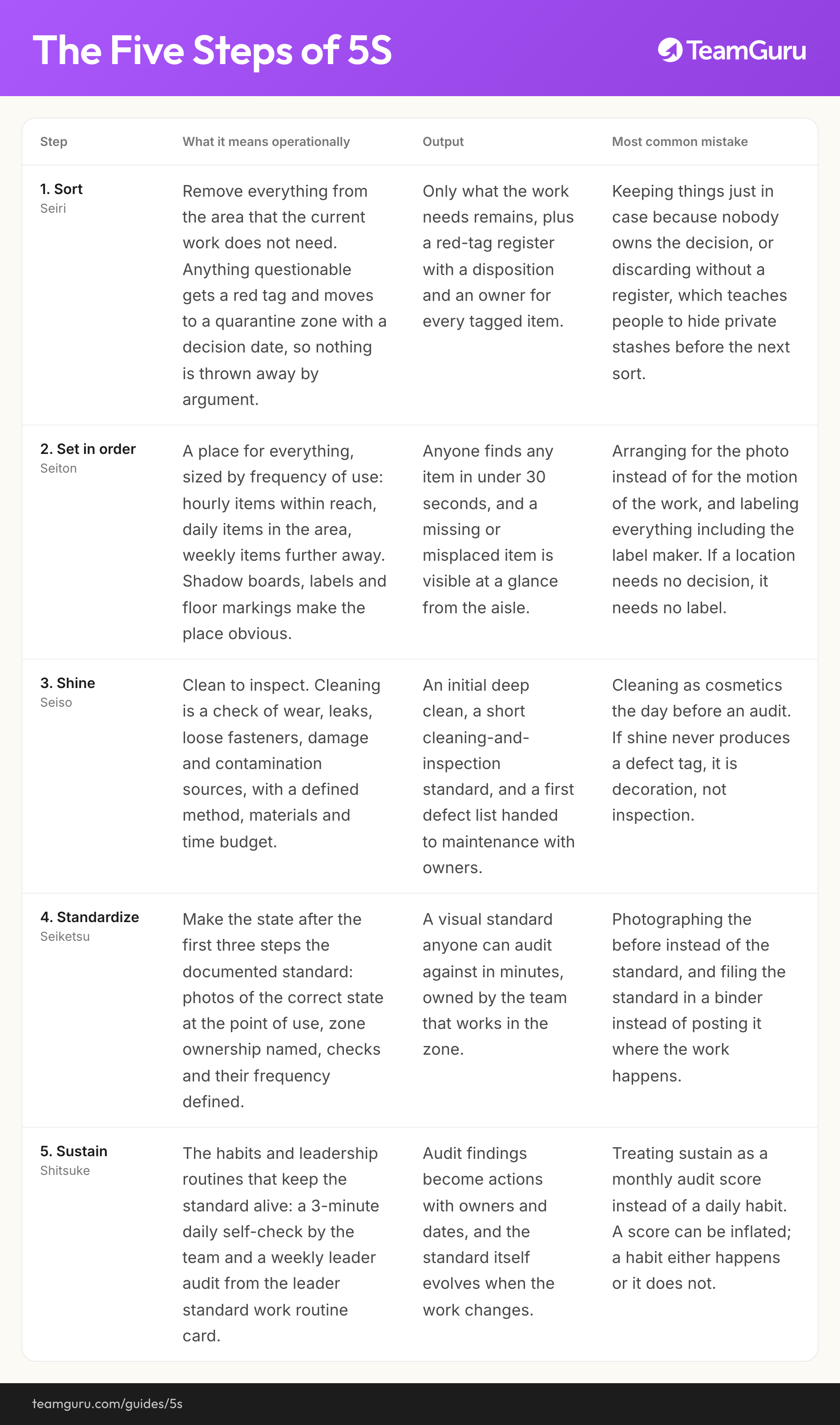
| Krok | Co znamená v praxi | Výstup | Nejčastější chyba |
|---|---|---|---|
| 1. Vytřídit Seiri (Sort) | Odstraňte z prostoru všechno, co současná práce nepotřebuje. Cokoli sporného dostane červený štítek (red tag) a putuje do karanténní zóny s datem rozhodnutí, aby se nic nevyhazovalo v hádce. | Zůstane jen to, co práce potřebuje, plus registr červených štítků s rozhodnutím a vlastníkem u každé označené položky. | Nechávat věci „pro jistotu“, protože rozhodnutí nikdo nevlastní, nebo vyhazovat bez registru, což lidi naučí schovat si před dalším tříděním soukromé zásoby. |
| 2. Uspořádat Seiton (Set in order) | Místo pro všechno, a to podle četnosti použití: co se používá každou hodinu, na dosah; co denně, v úseku; co týdně, dál. Stínové tabule (shadow boards), popisky a podlahové značení to místo prozradí na první pohled. | Kdokoli najde jakoukoli položku do 30 sekund a chybějící nebo špatně odložená položka je z uličky vidět na první pohled. | Uspořádat pracoviště pro fotku místo pro pohyb práce a olepit popiskami všechno včetně štítkovače. Kde o místě nikdo nerozhoduje, popisek nic neřeší. |
| 3. Uklidit Seiso (Shine) | Uklízet znamená kontrolovat. Úklid je kontrola opotřebení, úniků, uvolněných spojů, poškození a zdrojů znečištění, s definovanou metodou, materiálem a časovým rozpočtem. | První hloubkový úklid, krátký standard úklidu a kontroly a první seznam závad předaný údržbě, s vlastníkem u každé položky. | Úklid jako kosmetika den před auditem. Když úklid nikdy nevyprodukuje štítek závady, je to dekorace, ne inspekce. |
| 4. Standardizovat Seiketsu (Standardize) | Udělejte ze stavu po prvních třech krocích dokumentovaný standard: fotografie správného stavu přímo na místě použití, pojmenovaný vlastník zóny, definované kontroly a jejich četnost. | Vizuální standard, podle kterého kdokoli zónu za pár minut zkontroluje. Patří týmu, který v ní pracuje. | Vyfotit stav před úklidem místo standardu a založit standard do šanonu, místo aby visel tam, kde se pracuje. |
| 5. Trvale udržovat Shitsuke (Sustain) | Návyky a rutiny vedoucích, které drží standard naživu: denní tříminutová sebekontrola týmu a týdenní audit vedoucího z rutinní karty standardizované práce vedoucích. | Z nálezů auditu se stávají akce s vlastníkem a termínem a sám standard se vyvíjí, když se změní práce. | Brát udržování jako měsíční skóre auditu místo jako denní návyk. Skóre se dá nafouknout; návyk se buď děje, nebo ne. |
Kde 5S leží v roadmapě transformace
Na roadmapě nasazení TeamGuru patří 5S do praktiky standardizovaná práce a 5S ve fázi Denní řízení, spouštěné souběžně s denním řízením výroby. Ta dvojice je záměrná: denní porada dá nálezům z 5S adresu a 5S dá dennímu systému něco poctivého, na co se dívat. Běží také vedle standardizované práce, protože teprve pracoviště, kde má každý nástroj a přípravek známé místo, dělá pracovní postup fyzicky opakovatelným.
- Předtím Výchozí KPI
- Jste zde Standardizovaná práce a 5S
- Souběžně Shop Floor Management
- Potom Strukturované řešení problémů
Kdy je 5S špatný začátek
5S se často prodává jako bezpečný první krok v leanu: viditelný, levný, s nízkým rizikem. To je zpola pravda. Jako první viditelná výhra funguje, ale jen tehdy, když se s ním dodá i mechanismus udržování, tedy denní kontrola, týdenní audit vedoucího a tabule, kde se z nálezů stávají akce. Kosmetické 5S spuštěné dřív, než existuje jakýkoli rytmus řízení, se rozpadne zhruba za 90 dní. A stáhne s sebou důvěryhodnost další iniciativy: lidé už jednou viděli program přijít a odejít. Nezačínejte, když:
- Neexistuje rytmus denního řízení. Bez denní porady, kde se kontroly probírají, a bez tabule, kam nálezy patří, se 5S rozpadne zhruba za 90 dní: v rutině závodu se na něj nikdo nezeptá.
- Vedoucí nedají čas na audity. Když vedoucí úseku neudrží deset minut týdně na audit jedné zóny, program se spouští proto, aby selhal, a vina padne na disciplínu operátorů.
- Cílem je fotoreport pro centrálu. Když má být výstupem prezentace před a po pro řídicí výbor, dostanete přesně to a nic víc.
- Údržba nemá kapacitu na nálezy. Úklid vynese úniky a opotřebené díly na světlo během několika dní; když štítky závad skončí ve frontě, kterou nikdo nezpracovává, tým se naučí, že dívat se pozorně nemá smysl.
Jak zavést 5S, zóna po zóně
Dotáhněte jednu zónu do plného 5S včetně čtyř týdnů prokázaného udržování, než sáhnete na druhou. Vedle celozávodní nárazové akce to působí pomalu, ale v každém ohledu, na kterém záleží, je to rychlejší. Pilot vychová auditory, vytvoří šablony a přinese důkaz; každá další zóna pak kopíruje fungující příklad místo slidu. Čísla níže jsou ilustrativní, z pilotu v jedné montážní buňce u výrobce komponent se 450 lidmi, na kterém stavíme příklady v celé této sadě průvodců.
| Kdy | Co se děje |
|---|---|
| Týden 0: příprava | Vyberte jednu pilotní zónu: jeden tým, jasné fyzické hranice, viditelnost z uličky. Určete vlastníka zóny z tohoto týmu. Dohodněte pravidla pro červené štítky a zřiďte karanténní prostor s datem rozhodnutí. Naplánujte týmu dvě hodiny týdně přímo v rozvrhu, ne jako přesčas. |
| Týden 1: vytřídit | Proveďte akci s červenými štítky s celým týmem. Všechno, co současná práce nepotřebuje, dostane štítek a jde do karantény; registr zapíše položku, důvod a vlastníka rozhodnutí. Ilustrativní rozsah pro jednu montážní buňku: asi 140 označených položek, zhruba 60 vyřazeno, 45 přemístěno, 35 vráceno zpět po skutečném rozhodnutí. |
| Týden 2: uspořádat | Rozmístění navrhují lidé, kteří v zóně pracují: stínové tabule na nářadí, popsaná místa pro přípravky a spotřební materiál, podlahové značení pro vozíky a rozpracovanou výrobu. Týden si rozmístění vyzkoušejte s lepicí páskou a kartonem, než cokoli uděláte natrvalo. |
| Týden 3: uklidit | První hloubkový úklid jako inspekce: prohlédne se každý povrch, kryt a spoj a každý únik, opotřebený díl a povolený šroub dostane štítek závady pro údržbu. Napište standard úklidu a kontroly: kdo, co, kdy, jak dlouho, které nálezy jdou kam. |
| Týden 4: standardizovat | Vyfoťte standardní stav, ne stav před úklidem, a vyvěste fotografie přímo na místě použití. Definujte denní tříminutovou sebekontrolu a otázky týdenního auditu. Potvrďte vlastnictví zóny a to, co tým dělá s nálezem, který nedokáže opravit sám. |
| Od týdne 5: udržovat | Tým dělá tříminutovou kontrolu na konci každé směny; vedoucí úseku audituje týdně z rutinní karty. Z nálezů se na tabuli týmu stávají akce s vlastníkem. Na další zónu se rozšiřujte teprve tehdy, až pilot udrží svůj standard čtyři týdny v řadě. |
Pravidla, která udrží zavádění poctivé
- O tom, co zůstane a kde bude bydlet, rozhodují lidé, kteří v zóně pracují. Facilitátoři přinášejí metodu a pravidla; nepřinášejí názory na cizí nářadí.
- Foťte standard, ne stav před úklidem. Fotky před a po pobaví řídicí výbor jednou; fotky správného stavu kontrolují pracoviště každý den.
- Každá položka s červeným štítkem dostane rozhodnutí s vlastníkem a datem. Nevyřešená hromada v karanténě je jen nepořádek, který se posunul o dvacet metrů.
- Dejte pilotu skutečný naplánovaný čas. 5S dělané v přesčasech nebo mezi cykly přesně ukazuje, jak si ho závod cení.
- Rozšiřujte teprve tehdy, až pilot udrží svůj standard čtyři týdny v řadě. Druhá zóna spuštěná ve chvíli, kdy první chátrá, zdvojnásobí chátrání, ne pokrok.
Úklid je inspekce, ne dekorace
Nejvíc nevyužitý krok je ten třetí, protože se čte jako uklízečská práce. Není. Čistit stroj vlastníma rukama je nejlevnější inspekce, jakou závod má: člověk, který utírá vedení, cítí rýhy, vidí olejový film tam, kde žádný olej nemá být, a všimne si šroubu, který se každý týden povolí. V ilustrativním pilotu výše vydal první hloubkový úklid jedné buňky tucet štítků závad, mezi nimi dva pomalé úniky a opotřebený závěs krytu, všechny nalezené, dokud byly ještě levné.
Aby se to dělo dál, musí platit dvě věci. Standard úklidu musí říkat, na co se při úklidu dívat, opotřebení, úniky, povolené šrouby, zdroje znečištění, ne jen co utřít. A každý nález potřebuje cestu k někomu, kdo bude jednat: drobnosti opraví tým, zbytek dostane štítek pro údržbu a viditelně se sleduje. Je to táž logika inspekce vedené operátory, na které TPM staví autonomní údržbu; závod, který dělá úklid vážně, s TPM už začal, aniž by to ohlásil. Ve chvíli, kdy se štítky závad přestanou zpracovávat, spadne úklid zpátky do kosmetiky, protože lidé přestanou hlásit, co nikdo neopraví.
Udržování: páté S je věc vedení
Udržování jsou dvě rutiny a obě musí být vidět v kalendáři, ne jen naznačené na plakátu. První je vlastní tříminutová kontrola týmu na konci každé směny: projít zónu proti fotostandardu, vrátit, co se zatoulalo, zapsat, co nejde opravit na místě. Tři minuty nejsou náhoda, ale záměr: kontrola, která trvá patnáct minut, se první rušný den vynechá, a rušný je každý den.
Druhá rutina je týdenní audit a patří na rutinní kartu standardizované práce vedoucích (Leader Standard Work) vedoucího úseku: jedna zóna týdně, deset minut, na pracovišti a s týmem. Audit existuje proto, aby vytvářel nálezy a koučování, ne známku. Každý nález dostane do týdne jedno ze tří rozhodnutí: opravit, zaškolit, nebo změnit standard, protože se změnila práce. Nález bez rozhodnutí učí tým, že audit je divadlo. Jak program dozrává, přejdou tyto audity zón přirozeně do vrstvených procesních auditů (LPA), kde vedení závodu kontroluje zónu měsíčně a otázky rotují.
Všimněte si, co chybí: cílové skóre. Sledujte trend a to, jestli se nálezy zavírají, a rostoucí počet drobných nálezů berte jako zdraví, ne jako selhání. Úsek, který měsíc nehlásí nic, není dokonalý. Přestal se dívat.
Časté důvody selhání
5S selhává v rozpoznatelných vzorcích a všechny jsou selháním řízení převlečeným za nedostatek disciplíny operátorů. Na čtyři z nich padá většina pohřbů:
Firemní týden 5S
Každý úsek prohnaný za pět dní, bannery, trička, fotostěny. Za šest týdnů mají stínové tabule mezery a uličky se zase plní, protože nárazová akce postaví první čtyři S všude a páté S nikde. Jedna zóna dotažená do plného 5S včetně udržování porazí dvacet zón dotažených ke standardizaci.
Červené štítky v cizích úsecích
Zlepšovatelský tým nebo administrativní útvar vytřídí pracoviště, na kterém sám nepracuje. Lidé, kterým úsek patří, si tiše přinesou všechno zpátky, a mají na to právo: vědí, co práce potřebuje. Třídění je rozhodnutí, které dělá vlastní tým zóny podle dohodnutých pravidel, s podporou, ne za něj.
Nafouknutá skóre auditů
Když je cílem skóre, rostou skóre a ne pracoviště. Úseky se naučí checklist, auditoři změknou, aby udrželi klid, a závod s 94 % vypadá každý měsíc hůř. Sledujte trend a to, jestli se nálezy zavírají; oslavujte nalezené problémy, ne prázdné archy.
Popisky jako samoúčel
Popisek dostane každá zásuvka, police i sešívačka, včetně štítkovače, a zóna vypadá uspořádaně, zatímco tok práce zůstal nedotčený. Uspořádání existuje proto, aby zkrátilo pohyb a zviditelnilo, co chybí. Když popisek nikdy nezabrání hledání ani neukáže chybějící položku, sundejte ho.
Co následuje
Zóna v plném 5S mění, co dokážou praktiky kolem ní. Zpřehlední standardizovanou práci: když má každý nástroj své místo a správný stav je vyfocený, ověříte dodržení standardu za pár minut místo hádek. A zviditelní denní řízení: stav zóny přijde na ranní poradu sám a nálezy z 5S sdílejí stejné dráhy na SQDIP tabuli jako každá jiná odchylka, s vlastníky a termíny místo zvláštní byrokracie kolem 5S.
Udržování s sebou nese administrativu: naplánované kontroly, rotující audity a nálezy, které se nesmí vypařit. Přesně tady papírové systémy tiše vzdávají a přesně tady zapadá do praxe TeamGuru. Checklisty a audity vedou denní kontroly i týdenní audity zón na tabletu přímo na pracovišti. Z fotonálezů se stávají akce s vlastníkem a termínem a denní porada vidí, jak stárnou.
Na roadmapě je následující praktikou strukturované řešení problémů. To pořadí není náhodné: pracoviště, které vynáší odchylky na povrch během několika sekund, produkuje stálý proud malých, dobře popsaných problémů. A to je přesně surovina, na které se systém řešení problémů vycvičí, než přijdou ty velké.
Vezměte si s sebou
Diagram z tohoto průvodce jako obrázek, volně použitelný v interních školeních a workshopech.
Stáhnout PNGČasté otázky
Co znamená pět S?
Je 5S jen úklid a pořádek na pracovišti?
Jak dlouho trvá zavedení 5S?
Jak udržet 5S po startovním týdnu?
Funguje 5S v kanceláři?
Jaké je dobré skóre auditu 5S?
Jak to TeamGuru řeší v praxi