Umsetzungsleitfaden
Managementbewertung (Management Review).
Die Managementbewertung (Management Review) ist die monatliche Sitzung, in der die Standortleitung Strategie und Tagesgeschäft zusammenführt: KPI-Abweichungen mit Gegenmaßnahmen, Meilensteine der Projekte, eskalierte Probleme und Entscheidungen mit Verantwortlichen und Terminen. Der Prüfstein ist das Entscheidungsprotokoll. Wenn ein Monat voller Bewertungen nur Erklärungen hervorbringt, aber keine Entscheidungen mit Verantwortlichen, ist die Sitzung ein Berichtsritual, und die echten Entscheidungen fallen auf dem Flur.
Wozu eine Managementbewertung dient
Die Managementbewertung ist die monatliche Sitzung, in der die Leitung eines Standorts Strategie und Tagesgeschäft zusammenführt. Die täglichen Shopfloor-Meetings schützen den heutigen Tag, die Strategieumsetzung hat die Jahresziele gesetzt, und in der Bewertung treffen beide aufeinander. Sie liest die KPI-Abweichungen des Monats und deren Gegenmaßnahmen, prüft die Meilensteine des Verbesserungsportfolios, nimmt die Eskalationen auf, die Befugnis oder Geld brauchen, und verwandelt all das in Entscheidungen mit Verantwortlichen und Terminen.
Dieser letzte Satz ist der ganze Prüfstein. Erklärungen, Grafiken und Status sind das Material einer Bewertung; Entscheidungen sind ihr einziges Ergebnis. Ein Werk erkennt binnen eines Monats, welche Art von Sitzung es hat, denn der Beleg ist binär: Entweder das Entscheidungsprotokoll enthält Einträge mit Verantwortlichen, oder es enthält keine. Wenn nicht, ist die Bewertung ein Berichtsritual, und die Entscheidungen, die das Werk tatsächlich steuern, fallen auf dem Flur, in Vieraugengesprächen und in E-Mail-Verläufen, unsichtbar und ohne Nachverfolgung.
Zur Abgrenzung: Diese Seite behandelt die Sitzung selbst, ihre Unterlagen, die Agenda und die Moderation. Gemeint ist die operative Managementbewertung im Monatsrhythmus, nicht nur die jährliche Bewertung durch die oberste Leitung nach ISO 9001, Kapitel 9.3; ein Standort mit dem hier beschriebenen Rhythmus erfüllt deren Anforderungen nebenbei. Der Raum, in dem viele reife Werke sie abhalten, mit Wänden für Strategie, Leistung, Projekte und Probleme, hat einen eigenen Leitfaden: Obeya. Eine Bewertung braucht kein Obeya, um zu funktionieren, aber ein Obeya macht die Vorbereitung einer guten Bewertung günstiger, weil die Wände die Vorablektüre sind.
Wo sie in der Transformations-Roadmap steht
In der TeamGuru-Einführungs-Roadmap gehört die Managementbewertung zur Praxis Obeya und Managementbewertung in der Phase Skalieren. Der Monatsrhythmus sitzt über den täglichen Shopfloor-Meetings und funktioniert nur, wenn es diese gibt: Die Bewertung lebt vom Strom an Abweichungen und Eskalationen, den die Kaskade erzeugt. Eine Monatsbewertung, die einem Werk ohne Shopfloor Management aufgesetzt wird, ist eine monatliche Zusammenfassung von Überraschungen.
- Davor Shopfloor Management
- Sie sind hier Obeya & Managementbewertung
- Parallel dazu Qualifikationsmatrix
- Danach Standardisieren & Skalieren
Wo Bewertungen schieflaufen, bevor sie beginnen
Fast jedes Werk hat bereits eine monatliche Bewertung, deshalb geht es hier selten um einen Start. Es geht um eine Neugestaltung, und die beginnt mit einem ehrlichen Blick auf die heutige Sitzung. Vier Symptome sagen ein Berichtsritual voraus, bevor jemand ein Wort gesagt hat:
- Die Zahlen werden tagelang von Hand zusammengetragen. Analysten exportieren, gleichen ab und formatieren Zahlen in einen Foliensatz; am Tag der Sitzung sind die Daten eine Woche alt, und die Definition der Liefertreue (OTD) der einen Abteilung widerspricht der einer anderen. Allein die Vorbereitungskosten garantieren, dass die Sitzung als Aufführung behandelt wird.
- Folien statt lebender Dashboards. Ein Foliensatz ist eine kuratierte Argumentation. Jeder Monat Folienproduktion bringt den Vortragenden bei, zu rahmen, zu glätten und Einwände vorwegzunehmen, und dem Raum, die Rahmung zu kritisieren statt den Betrieb.
- Alles ist grün. Ein Standort mit 79 Prozent Liefertreue und einer Wand voller grüner KPI hat ein Messproblem oder ein Mutproblem, meistens beides. Außen grün, innen rot ist das zuverlässigste Zeichen dafür, dass frühere Bewertungen Ehrlichkeit bestraft haben.
- Die Sitzung endet, ohne dass jemand sagen kann, was entschieden wurde. Protokolle voller „wurde besprochen“ und „wurde vorgestellt“, Maßnahmenlisten ohne Termine, und dieselben Themen kehren im nächsten Monat unverändert zurück.
So gestalten Sie eine bestehende Bewertung neu
Die Neugestaltung besteht aus sechs Schritten, und die Reihenfolge zählt: Regeln vor Zahlen, Zahlen vor Agenda. Kündigen Sie sie als Änderung des Arbeitsvertrags der Runde an, nicht als Änderung einer Vorlage. Was sich wirklich ändert, ist, was Führungskräfte mitbringen sollen und was der Raum ihnen dafür schuldet.
Zuerst die Ausnahmeregeln schreiben
Definieren Sie auf einer Seite, was Redezeit verdient: ein KPI außerhalb seines Zielbands, ein roter oder gefährdeter Meilenstein, eine Eskalation mit Entscheidungsvorlage. Alles andere lebt in der Vorablektüre. Ohne schriftliche Regeln bekommt derjenige die Redezeit, der die beste Geschichte vorbereitet hat, und die Sitzung wird wieder zur Werksführung.
Die Datengrundlage auf lebende Dashboards umstellen
Die Bewertung liest dieselben KPI-Dashboards, mit denen die täglichen Shopfloor-Meetings arbeiten, zum Monatsende eingefroren, mit dem Kommentar des Verantwortlichen direkt neben den Abweichungen. Wenn eine Abteilung drei Tage braucht, um ihren Teil vorzubereiten, wird dieser Teil produziert, und produzierte Zahlen verhalten sich verdächtig gut. Schaffen Sie den Foliensatz ganz ab.
Die Vorablektüre einführen
Ein Paket, 48 Stunden vorher versandt, in 30 Minuten lesbar: das eingefrorene Dashboard, der Meilensteinstatus, das Entscheidungsprotokoll mit markierten Fälligkeiten und jede Eskalation mit Entscheidungsvorschlag. Die Sitzung beginnt dort, wo die Vorablektüre endet. Wird sie im Raum vorgelesen, ist das der sicherste Hinweis darauf, dass die Neugestaltung nicht angekommen ist.
Alles umsortieren, Rot zuerst
Drehen Sie die klassische Reihenfolge um, die sich die Probleme fürs Ende aufhebt, wenn Energie und Zeit weg sind. Die roten Themen bekommen die beste Aufmerksamkeit des Raums in der ersten Hälfte. Wer einen grünen Bereich verantwortet, darf mit einer kurzen Sitzung rechnen, und genau diese Erwartung ist die Belohnung für Grün.
Das Entscheidungsprotokoll im ersten Monat starten
Das Protokoll ist die Sitzungsniederschrift. Es gibt kein zusätzliches Protokolldokument, keine Maßnahmenliste im Notizbuch einer einzelnen Person. Endet der erste Monat mit einem leeren Protokoll, ist das kein Formatproblem, sondern die Diagnose: Die Sitzung hat informiert, und die Neugestaltung beginnt wieder bei den Ausnahmeregeln.
Zeitfenster setzen und halten
Neunzig Minuten mit sichtbarer Uhr und einem Parkplatz für Themen. Was nicht hineinpasst, bekommt auf dem Parkplatz einen Verantwortlichen und einen Termin, keine zehn geliehenen Minuten. Bewertungen, die überziehen, werden nicht besser, sie werden von Stellvertretern besucht.
Rechnen Sie damit, dass der zweite Monat schwerer wird als der erste. Der erste Monat lebt von der Neuheit; im zweiten bringt jemand doch wieder einen Foliensatz mit, jemand anderes rollt eine protokollierte Entscheidung neu auf, und die Vorablektüre kommt zu spät. Wie die Sitzungsleitung im zweiten Monat reagiert, ist das, was das Werk sich merkt.
Die 90-Minuten-Agenda
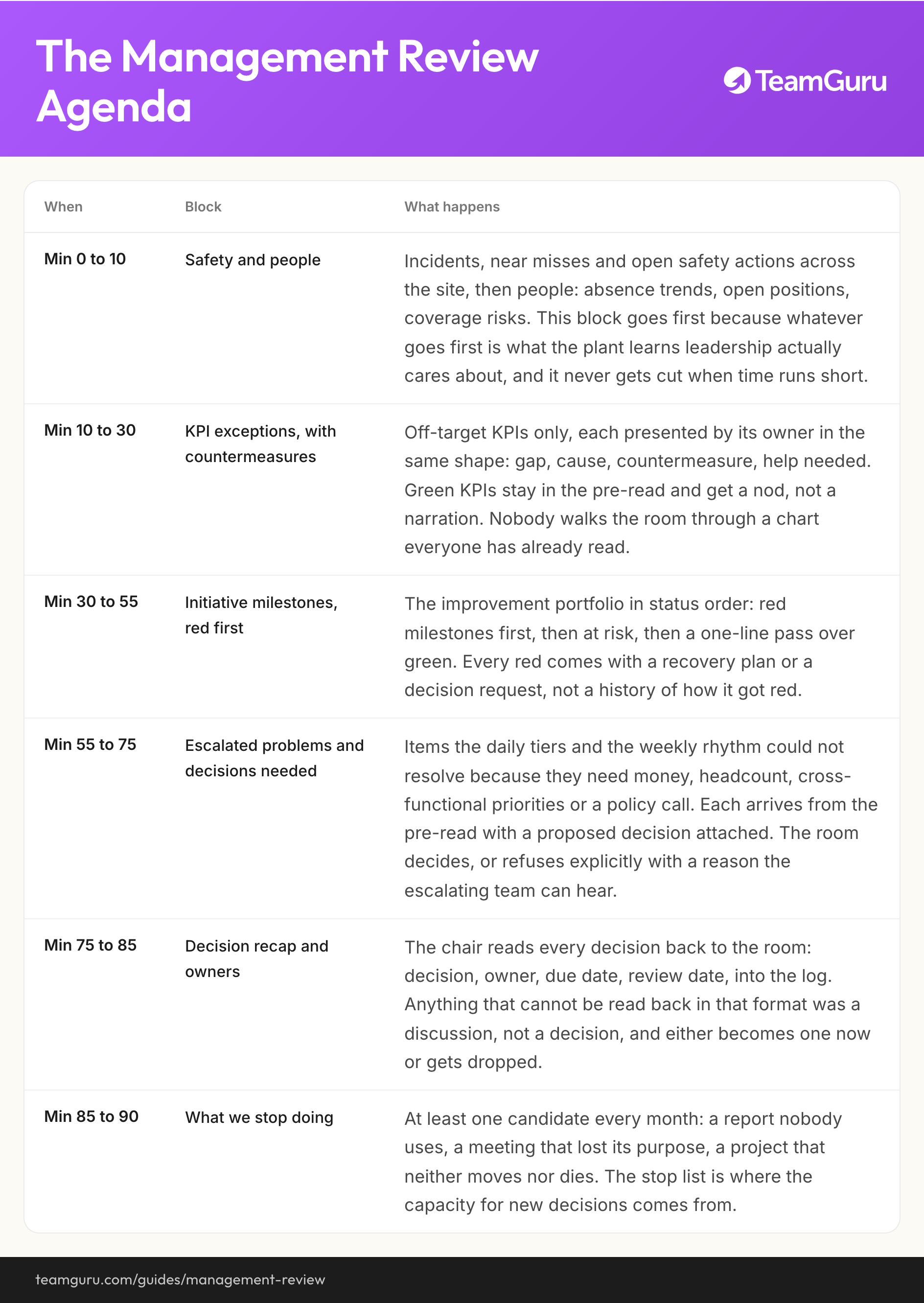
Jeden Monat dieselbe Agenda in derselben Reihenfolge, damit die Sitzung von ihrem Rhythmus lebt und nicht von der Energie der Sitzungsleitung. Die Proportionen tragen die Philosophie: Zwei Drittel der Zeit gehen an Abweichungen, Meilensteine und Eskalationen, und die Sitzung endet damit, dass sie ihr eigenes Ergebnis zurückliest.
| Wann | Block | Was passiert |
|---|---|---|
| Min. 0 bis 10 | Arbeitssicherheit und Mitarbeitende | Unfälle, Beinaheunfälle und offene Sicherheitsmaßnahmen im gesamten Werk, danach die Menschen: Abwesenheitstrends, offene Stellen, Risiken bei der Besetzung. Dieser Block steht vorn, weil das Werk am ersten Tagesordnungspunkt abliest, was der Führung wirklich wichtig ist, und weil er nie gestrichen wird, wenn die Zeit knapp wird. |
| Min. 10 bis 30 | KPI-Abweichungen samt Gegenmaßnahmen | Nur KPI außerhalb des Zielbands, jeweils vom Verantwortlichen im immer gleichen Muster vorgetragen: Abweichung, Ursache, Gegenmaßnahme, benötigte Unterstützung. Grüne KPI bleiben in der Vorablektüre und bekommen ein Nicken, keinen Vortrag. Niemand führt den Raum durch eine Grafik, die alle bereits gelesen haben. |
| Min. 30 bis 55 | Projektmeilensteine, Rot zuerst | Das Verbesserungsportfolio in Statusreihenfolge: erst rote Meilensteine, dann gefährdete, dann ein einzeiliger Durchgang über die grünen. Zu jedem Rot gehört ein Aufholplan oder eine Entscheidungsvorlage, nicht die Geschichte, wie es rot wurde. |
| Min. 55 bis 75 | Eskalierte Probleme und offene Entscheidungen | Themen, die die täglichen Shopfloor-Meetings und der Wochenrhythmus nicht lösen konnten, weil sie Geld, Personal, bereichsübergreifende Prioritäten oder eine Grundsatzentscheidung brauchen. Jedes kommt aus der Vorablektüre mit einem Entscheidungsvorschlag. Der Raum entscheidet oder lehnt ausdrücklich ab, mit einer Begründung, die das eskalierende Team nachvollziehen kann. |
| Min. 75 bis 85 | Entscheidungen zusammenfassen und zuordnen | Die Sitzungsleitung liest jede Entscheidung in den Raum zurück: Entscheidung, Verantwortlicher, Fälligkeit, Überprüfungstermin, ins Protokoll. Was sich in diesem Muster nicht zurücklesen lässt, war eine Diskussion und keine Entscheidung: Es wird jetzt eine, oder es fällt weg. |
| Min. 85 bis 90 | Was wir künftig lassen | Jeden Monat mindestens ein Kandidat: ein Bericht, den niemand nutzt, ein Meeting ohne Zweck, ein Projekt, das sich weder bewegt noch stirbt. Diese Streichliste ist die Quelle der Kapazität für neue Entscheidungen. |
Beachten Sie, was die Agenda nicht enthält: keine Eröffnungsrunde, keine Tiefenanalyse der Finanzen und keine Abteilungspräsentationen. Finanzzahlen leben wie alles andere in der Vorablektüre. Jedes Thema, das 30 Minuten gemeinsame Analyse braucht, bekommt eine eigene Arbeitssitzung mit genau den Personen, die etwas beitragen können: im Raum terminiert, anderswo abgehalten.
Das Entscheidungsprotokoll
Sechs Spalten, eine Zeile je Entscheidung, und es ersetzt zugleich die Sitzungsniederschrift. Die Spalte mit dem Überprüfungstermin fehlt in den meisten Protokollen und ist genau die, die das Protokoll wirksam macht: Jede Entscheidung sagt, wann der Raum prüft, dass sie umgesetzt wurde und dass sie gewirkt hat, und das ist ein anderes Datum als die Fälligkeit. Die Zeilen unten sind beispielhaft und stammen vom selben Komponentenhersteller mit 450 Beschäftigten, der auch in der Transformations-Roadmap verwendet wird: ein Werk, das 456 Stück pro Tag ausliefert und seine Liefertreue von 79 Prozent nach oben arbeitet.
| Datum | Entscheidung | Verantwortlich | Fällig | Überprüfungstermin | Status |
|---|---|---|---|---|---|
| 12. März | Projekt zur Rüstzeitreduzierung in der Zerspanung finanzieren: Werkzeugbau reserviert zwei Tage pro Monat, Ziel 47 auf 18 Minuten, Losgrößen nach jedem Schritt neu bewertet | Wertstrommanager | 31. Aug. | Jede Bewertung bis zum Abschluss | Im Plan |
| 9. April | Projekt zur Umgestaltung der Verpackung stoppen. Die verbleibenden Engineering-Stunden gehen an den Engpass in der Montage, bis die Liefertreue ein volles Quartal über 85 Prozent bleibt | Leiter Engineering | 30. Apr. | Bewertung im Mai | Abgeschlossen, verifiziert |
| 14. Mai | Zweiten Instandhaltungstechniker in der Nachtschicht einsetzen: Die Reaktionszeit bei Störungen liegt nachts im Schnitt bei 41 Minuten gegenüber 12 Minuten tagsüber, und die Zerspanung verliert täglich 33 Minuten durch Störungen | Werkleiter | 1. Juli | Bewertung im August, gegen den Stillstandstrend | In Arbeit |
Drei Details halten ein Protokoll am Leben. Erstens ist es innerhalb des Führungsteams öffentlich, sodass eine protokollierte Entscheidung nicht still nachverhandelt werden kann. Zweitens werden fällige Entscheidungen in der nächsten Vorablektüre automatisch markiert, sodass die Nachverfolgung niemanden Gedächtnisleistung kostet. Drittens taucht die zweite Beispielzeile überhaupt im Protokoll auf: Eine Stopp-Entscheidung wird mit derselben Disziplin protokolliert wie eine Finanzierungsentscheidung, denn nicht getroffene Stopp-Entscheidungen sind die größte Kapazitätsverschwendung in Werken.
Moderationsverhalten, das den Unterschied macht
Agenda und Protokoll sind Papier. Ob die Bewertung etwas verändert, entscheidet, wie sich die Sitzungsleitung 90 Minuten lang verhält, denn der Raum liest die Leitung und nicht die Vorlage. Fünf Verhaltensweisen tragen den größten Teil davon:
- Fragen Sie nach Gegenmaßnahmen, nicht nach Erklärungen. Ersetzen Sie „Warum ist das rot?“ durch „Was ist Ihre Gegenmaßnahme, und was brauchen Sie dafür?“. Die erste Frage erzeugt Vergangenheit, die zweite erzeugt Arbeit.
- Bedanken Sie sich laut und im Raum, wenn rote Zahlen früh gemeldet werden. Der Dank ist keine Höflichkeit, er ist Systempflege: Er hält das Dashboard im nächsten Monat ehrlich.
- Beenden Sie Zombie-Projekte. Jede Initiative ohne Meilensteinfortschritt über zwei aufeinanderfolgende Bewertungen bekommt eine Entscheidung über Stopp oder erneute Verpflichtung, keinen dritten Monat höflichen Status.
- Entscheiden Sie im Raum. Wenn alle Beteiligten anwesend sind, ist eine Vertagung eine Verweigerung im Anzug. Vertagen ist nur legitim, wenn Informationen fehlen, nicht wenn Mut fehlt.
- Schützen Sie die letzten fünf Minuten. Der Block „Was wir künftig lassen“ wird als Erstes gestrichen, wenn die Sitzung überzieht, und er ist der Block, der alles andere finanziert.
Die zweite Verhaltensweise braucht eine Verteidigung, weil sie sich falsch herum anfühlt. Wer rote Zahlen bestraft, kauft sich grüne Lügen. Sobald eine Führungskraft für ein ehrliches Rot vorgeführt wird, rechnet jede andere Führungskraft im Raum neu durch, was sie im nächsten Monat berichtet, und das Dashboard beginnt seinen langsamen Weg zur Dekoration. Die Disziplin besteht darin, die Zahl von der Person zu trennen: Eine rote Zahl mit glaubwürdiger Gegenmaßnahme ist eine Führungskraft, die ihre Arbeit macht, und ein früh sichtbar gemachtes Rot ist für den Standort mehr wert als ein Grün, weil man darauf noch reagieren kann. Druck gehört auf fehlende Gegenmaßnahmen und rutschende Entscheidungen, niemals auf die Farbe selbst.
Die Rhythmusarchitektur darum herum
Die Monatsbewertung ist eine Ebene von mehreren, und jede Ebene existiert, um das zu erledigen, was die schnellere Ebene darunter nicht kann. Sind die Ebenen gesund, wartet nichts einen Monat, was an einem Tag entschieden werden könnte, und die Bewertung bekommt Muster statt Überraschungen.
| Rhythmus | Takt | Die Frage, die er beantwortet |
|---|---|---|
| Shopfloor-Meetings | Täglich | Lief gestern nach Standard, und wer handelt heute? Abweichungen werden binnen Stunden beantwortet. |
| Obeya-Review | Wöchentlich | Bewegen sich KPI, Projekte und Probleme, und was muss diese Woche freigeräumt werden? |
| Managementbewertung | Monatlich | Welche Muster brauchen Entscheidungen: Ressourcen, Prioritäten, das Portfolio, Eskalationen mit Bedarf an Befugnis. |
| Strategieanpassung | Quartalsweise | Sind die Jahresziele noch die richtigen, und was verschiebt sich bei Zielwerten oder Ressourcen? |
| Hoshin-Planung | Jährlich | Was sind die wenigen Durchbruchziele des nächsten Jahres, und wer verpflichtet sich worauf? |
Alle Ebenen teilen sich ein Nervensystem. Die tägliche Ebene ist die Kaskade der Shopfloor-Meetings (Tier Meetings), die wöchentliche Ebene läuft meist als Obeya-Review, und die jährliche Ebene ist die Hoshin-Planung, deren Ziele die Quartalsanpassung ehrlich hält. Entscheidend ist, dass jede Ebene dieselben Zahlen auf einer anderen Flughöhe liest: Die Schichtkennzahlen auf den Boards laufen über den Kennzahlenbaum zu den Ergebnissen zusammen, die die Bewertung steuert. In dem Moment, in dem die Bewertung mit einem anderen Datensatz arbeitet als die Fläche, hören die Ebenen auf, ein System zu sein, und werden zu einem Organigramm aus Meetings.
Wie es weitergeht
Eine Bewertung, die verlässlich Entscheidungen hervorbringt, verändert, was der Rest des Systems von ihr verlangt. Eskalationen kommen mit Entscheidungsvorschlägen an, weil die Teams lernen, dass sie eine Antwort bekommen. Das Projektportfolio wird schlanker, weil Zombie-Projekte nicht länger durch Schweigen überleben. Und die Bewertung selbst wandert meist in ein Obeya, wo die Wände den größten Teil der Vorablektüre ersetzen und aus der Monatssitzung ein tieferer Durchgang über dieselben Flächen wird, die der Wochenrhythmus ohnehin abgeht.
Die laufenden Kosten einer guten Bewertung sind die Vorbereitung der Unterlagen und die Buchführung der Nachverfolgung, und genau hier fügt sich TeamGuru in die Praxis ein: Die Einsatzbereiche Operatives Reporting und KPI- und Performance-Management beenden die Berichtsindustrie, weil die Bewertung dieselben Live-Dashboards liest, mit denen die täglichen Meetings arbeiten, für den Monat eingefroren und mit bereits markierten Abweichungen. Der Einsatzbereich Standardisierte Meetings hält Agenda, Niederschrift und Entscheidungsprotokoll an einem Ort, mit jeder Entscheidung verknüpft mit den Maßnahmen, die sie umsetzen, sodass der Überprüfungstermin jeder Zeile mit seinen Nachweisen eintrifft.
Auf der Roadmap folgt die Praxis standardisieren und skalieren: Sobald der Bewertungsrhythmus eines Standorts Abweichungen verlässlich in Entscheidungen verwandelt, wird dieselbe Architektur aus Agenda, Protokoll und Moderationsvertrag zur Vorlage, die andere Standorte anpassen, und die standortübergreifende Bewertung liest einen gemeinsamen Kennzahlenbaum statt eines Ordners voller Formate.
Zum Mitnehmen
Das Diagramm aus diesem Leitfaden als Bild, frei verwendbar in internen Schulungen und Workshops.
PNG herunterladenHäufig gestellte Fragen
Wie lange sollte eine monatliche Managementbewertung dauern?
Wer sollte an einer Managementbewertung teilnehmen?
Was bedeutet Berichterstattung nach Ausnahmen?
Worin unterscheidet sich die Managementbewertung von Shopfloor-Meetings?
Was gehört in die Vorablektüre?
Wie verhindern wir, dass die Bewertung jeden Monat länger wird?
So setzt TeamGuru das um