Przewodnik wdrożeniowy
World Class Manufacturing (WCM): zasady, filary i praktyczna roadmapa wdrożenia.
World Class Manufacturing (WCM), czyli produkcja klasy światowej, to uporządkowane podejście do operational excellence. WCM układa w filary wszystko, co musi opanować czołowy zakład: bezpieczeństwo, koszty, jakość, terminowość dostaw, utrzymanie ruchu, logistykę, rozwój pracowników i ciągłe doskonalenie, a każdy filar prowadzi w stronę zera wypadków, zera wad, zera awarii i zera marnotrawstwa. WCM mówi, czego potrzebuje zakład klasy światowej. Zostaje pytanie praktyczne, na które odpowiada ten przewodnik: w jakiej kolejności to wszystko zbudować?
Czym jest World Class Manufacturing.
World Class Manufacturing to najbardziej ambitna odpowiedź na proste pytanie: jak wyglądałby ten zakład, gdyby niczego nie uznawać za normalne? Ani wskaźnika wypadków, ani poziomu braków, ani awarii, ani sześciu dni zapasu między dwiema maszynami. WCM układa tę ambicję w filary, jeden filar na jedną kompetencję, i prowadzi każdy z nich do celów, które celowo brzmią nierealnie: zero wypadków, zero wad, zero awarii, zero marnotrawstwa.
Dwie rzeczy odróżniają WCM od zwykłego programu doskonalenia. Po pierwsze, z założenia obejmuje wszystko: zakład nie będzie klasy światowej w utrzymaniu ruchu, jeśli dostarcza po terminie, więc filary pokrywają całą działalność. Po drugie, jak mało który program mówi wprost o pieniądzach. Cost Deployment, czyli lokalizowanie wszystkich strat i wycenianie ich, jest kompasem całego systemu: to on wskazuje, gdzie kierować doskonalenie.
Listy filarów milczą w jednej sprawie: od czego zacząć. Właśnie tej kolejności poświęcona jest druga połowa przewodnika.
Skąd wziął się ten termin.
Nazwę wprowadzili Robert Hayes i Steven Wheelwright w 1984 roku, a w ruch zamieniła ją książka Richarda Schonbergera z 1986 roku „World Class Manufacturing: The Lessons of Simplicity Applied”, która pokazała, co najlepsze japońskie i zachodnie zakłady tamtych lat robiły inaczej. W tym pierwszym znaczeniu klasa światowa była punktem odniesienia: mieć wyniki na poziomie najlepszych na świecie jednocześnie w jakości, kosztach, terminowości i elastyczności.
Drugie znaczenie jest węższe i bardziej operacyjne. W latach dwutysięcznych Fiat Group i profesor Hajime Yamashina z Uniwersytetu w Kioto ułożyli WCM w formalny system: dziesięć filarów technicznych, dziesięć zarządczych, zdefiniowane stopnie dojrzałości w każdym filarze i zewnętrzne audyty oceniające zakład w skali do 100 punktów, z wyróżnieniami na poziomie brązowym (50), srebrnym (60) i złotym (70) oraz progiem world class przy 85, ustawionym celowo na granicy osiągalności. Ten system rozszedł się po zakładach Fiat Chrysler i ich dostawcach. Do dziś kształtuje to, jak branża używa tego pojęcia.
Kiedy ktoś mówi dziś WCM, ma zwykle na myśli jedno z dwojga: ambicję albo audytowany system filarów. Ten przewodnik dotyczy obu, bo praktyczna praca pod spodem jest ta sama.
Miejsce na roadmapie.
WCM nazywa cel, roadmapa wyznacza drogę. Orientację zaczynasz tutaj, a pierwszym praktycznym krokiem jest uczciwa diagnoza.
- Jesteś tutaj World Class Manufacturing
- Potem Ocena stanu obecnego
- Potem Mapowanie strumienia wartości
Co klasa światowa znaczy w praktyce.
Odłóż szyld na bok, a klasa światowa sprowadza się do kilku cech, które da się zobaczyć. Straty są znane i wycenione: zakład potrafi powiedzieć, ile kosztowały go w zeszłym miesiącu zła jakość, awarie, oczekiwanie i nadmierny zapas, w pieniądzu i w rozbiciu na linie. Odchylenia wychodzą na wierzch tego samego dnia: czerwona liczba na tablicy w ciągu kilku godzin dostaje osobę odpowiedzialną i działanie z terminem, a nie czeka na comiesięczny przegląd. Problemy znikają na dobre: ta sama awaria nie wraca kwartał po kwartale, bo przyczyny źródłowe zostają usunięte, a standardy zaktualizowane. I nic z tego nie zależy od bohaterów: wynik utrzymuje się mimo urlopów, rotacji i audytów, bo opiera się na standardach, rutynach i kompetencjach, a nie na pojedynczych ludziach.
Zwróć uwagę, że każda z tych cech jest cechą systemu zarządzania, a nie narzędzia. To właśnie jest sednem kryteriów audytowych: różnica między zakładem z brązem a zakładem bez wyróżnienia rzadko polega na tym, które narzędzia są wdrożone. Polega na tym, czy działają jako jeden powiązany system, codziennie i wszędzie.
Filary techniczne i zarządcze.
Dziesięć filarów technicznych opisuje, co zakład musi opanować. Każdy filar odsyła do jednego albo kilku przewodników wdrożeniowych z tego zbioru, bo pod słownictwem WCM leżą wspólne praktyki Lean i TPM.
| Filar techniczny | Do czego dąży | Przewodniki wdrożeniowe |
|---|---|---|
| Bezpieczeństwo i higiena pracy | Zero wypadków; zagrożenia wychwytywane i usuwane systemowo | Tablice SQDIP · Audyty warstwowe procesu |
| Cost Deployment (straty wycenione w pieniądzu) | Straty zlokalizowane i wycenione w pieniądzu, więc o priorytetach decydują fakty finansowe | Mapowanie strumienia wartości · KPI w produkcji |
| Focused Improvement (doskonalenie skoncentrowane na stratach) | Największymi stratami zajmują się dedykowane zespoły, a efekt jest potwierdzony liczbami | Kaizen · Warsztaty Kaizen |
| Autonomiczne utrzymanie ruchu i organizacja stanowiska | Operatorzy przejmują podstawową obsługę maszyn na uporządkowanym stanowisku | 5S · TPM |
| Profesjonalne utrzymanie ruchu | Zero awarii dzięki utrzymaniu planowemu i opartemu na stanie maszyn | TPM · OEE |
| Kontrola jakości | Zero wad: jakość powstaje w warunkach procesu, a nie na kontroli, która wyłapuje wady po fakcie | Analiza przyczyn źródłowych (RCCA) · Poka-Yoke · FMEA |
| Logistyka i obsługa klienta | Materiał płynie w takcie, przy minimalnym zapasie i pewnej terminowości dostaw | Mapowanie strumienia wartości · Mapa stanu przyszłego |
| Early Equipment Management (nowe maszyny i produkty) | Nowe maszyny i produkty ruszają od razu na pełnych obrotach, bo projekt korzysta z wiedzy o wcześniejszych stratach | FMEA |
| Rozwój pracowników | Kompetencje budowane planowo pod widoczną lukę kompetencyjną, a nie przy okazji | Matryca kompetencji · Standard pracy lidera |
| Środowisko i energia | Straty środowiskowe traktowane z tą samą powagą co straty kosztowe | KPI w produkcji |
O dziesięciu filarach zarządczych mówi się mniej, a rozstrzygają one więcej. Ocenia się w nich zaangażowanie kierownictwa, jasność celów, mapę drogową programu (route map), przydział najlepszych ludzi do obszarów wzorcowych, czas i budżet oraz motywację operatorów. Czytaj je jak listę sposobów, w jakie programy umierają: niejasny cel, mapa drogowa, za którą nikt nie idzie, doskonalenie obsadzone tym, kto akurat miał czas. To filary zarządcze sprawiają, że dwa zakłady z tym samym repertuarem technicznym kończą zupełnie inaczej.
WCM, Lean i operational excellence.
Te trzy pojęcia mocno się pokrywają, a większość zamieszania znika po jednym rozróżnieniu. Lean to filozofia i zestaw metod: przepływ, system ssący, eliminacja marnotrawstwa, standaryzacja pracy, wyrosłe z Systemu Produkcyjnego Toyoty. WCM to struktura programu: pakuje metody Lean razem z TPM, zarządzaniem jakością i rozwojem pracowników w filary, a do tego dokłada Cost Deployment jako silnik priorytetów i audyty jako miarę głębokości i zasięgu. Operational excellence to ogólna nazwa samego celu, po którą sięgają firmy chcące treści bez konkretnego szyldu.
W praktyce: wewnątrz filaru WCM pracują narzędzia Lean i TPM. Wybór między WCM a Lean to głównie wybór między formalnie audytowanym programem a filozofią, którą sam sobie poukładasz. Sposoby, w jakie to się psuje, i kolejność wdrożenia, która temu zapobiega, są w obu przypadkach identyczne.
Typowe błędy w programach WCM.
WCM prowadzony jako teatr na potrzeby audytu
Kiedy celem staje się wynik punktowy, zakład przygotowuje się do audytu, zamiast prowadzić system: tablice odświeżone tydzień wcześniej, lekcje jednotematyczne (OPL) wydrukowane poprzedniego wieczoru, obszary wzorcowe wypolerowane, a reszta hali pracuje tak jak zawsze. Punkty rosną, straty zostają. Audyt jest termometrem. Podkręcanie termometru nie zbija gorączki.
Uruchamianie wszystkich filarów naraz
Dziesięć zespołów filarowych ruszających w tym samym kwartale konkuruje o tych samych liderów, te same godziny spotkań i ten sam kredyt zaufania. Każdy filar dostaje koordynatora i segregator, żaden nie dostaje wyników. Kompetencje mają swoje warunki wstępne: Cost Deployment potrzebuje wiarygodnych danych, a Focused Improvement działającego codziennego zarządzania, które utrzyma wypracowany efekt.
Biurokracja filarów zamiast jednego systemu zarządzania
Filar to spojrzenie na ten sam zakład, a nie osobny dział. Kiedy każdy filar buduje własne spotkania, własne tablice i własne raportowanie, zakład dorabia się drugiej administracji. Kompetencje zaczynają się sumować dopiero wtedy, gdy mają wspólny system: jeden zestaw KPI, jedną kaskadę spotkań, jedną ścieżkę eskalacji, jedną listę usprawnień.
Pominięcie Cost Deployment i poprawianie tego, co widać
Bez danych o stratach w pieniądzu doskonalenie idzie tam, gdzie jest najgłośniej albo najłatwiej coś zobaczyć. Zespół szlifuje przezbrojenie, które kosztuje niewiele, a przewlekła strata jakościowa po cichu zjada jego wielokrotność. Cost Deployment istnieje właśnie po to, żeby skierować Focused Improvement na straty, które mają znaczenie.
Rozwój pracowników sprowadzony do budżetu szkoleniowego
Klasa światowa mówi o tym, jak rutynowo pracują przeciętni ludzie, a nie o rekrutowaniu bohaterów. Jeśli kompetencji nie zestawia się z tym, czego naprawdę wymaga każda linia, wydatki na szkolenia dają certyfikaty, a nie umiejętności. Zakłady z wysokim wynikiem audytu potrafią pokazać, osoba po osobie, kto co umie i którą lukę zamykają jako następną.
Gdzie jesteś dzisiaj.
Do uczciwej oceny nie potrzebujesz zewnętrznego audytu. Zastąpią go z grubsza trzy sprawdziany. Przejdź wzdłuż przepływu i naucz się widzieć straty: ustrukturyzowany Gemba Walk pod kątem siedmiu marnotrawstw pokaże w jeden dzień, czy marnotrawstwo jest w Twojej organizacji widoczne, czy niewidzialne. Zmapuj jeden strumień wartości: mapa stanu obecnego zamienia wrażenia w liczby, zestawia lead time z czasem przetwarzania i zwykle przynosi pierwszy uczciwy szok. Potem sprawdź swoje liczby: jeśli wskaźnikom bezpieczeństwa, jakości, terminowości dostaw i efektywności maszyn (OEE) nie da się ufać albo ich przygotowanie zajmuje tydzień, to już jest wynik tej oceny.
Przydatna kalibracja: w audytowanym świecie WCM zakład, w którym odchylenia wychodzą na wierzch tego samego dnia, a powtarzające się problemy naprawdę znikają, jest już przed większością kandydatów do brązu, niezależnie od tego, jakimi narzędziami się posługuje.
Te same sprawdziany w uporządkowanej formie znajdziesz w bezpłatnej samoocenie WCM: obejmuje 23 praktyki w filarach i mówi, który obszar wzmocnić najpierw. Zajmuje około siedmiu minut i nie wymaga e-maila.
Jak wdrożyć WCM w pięciu etapach.
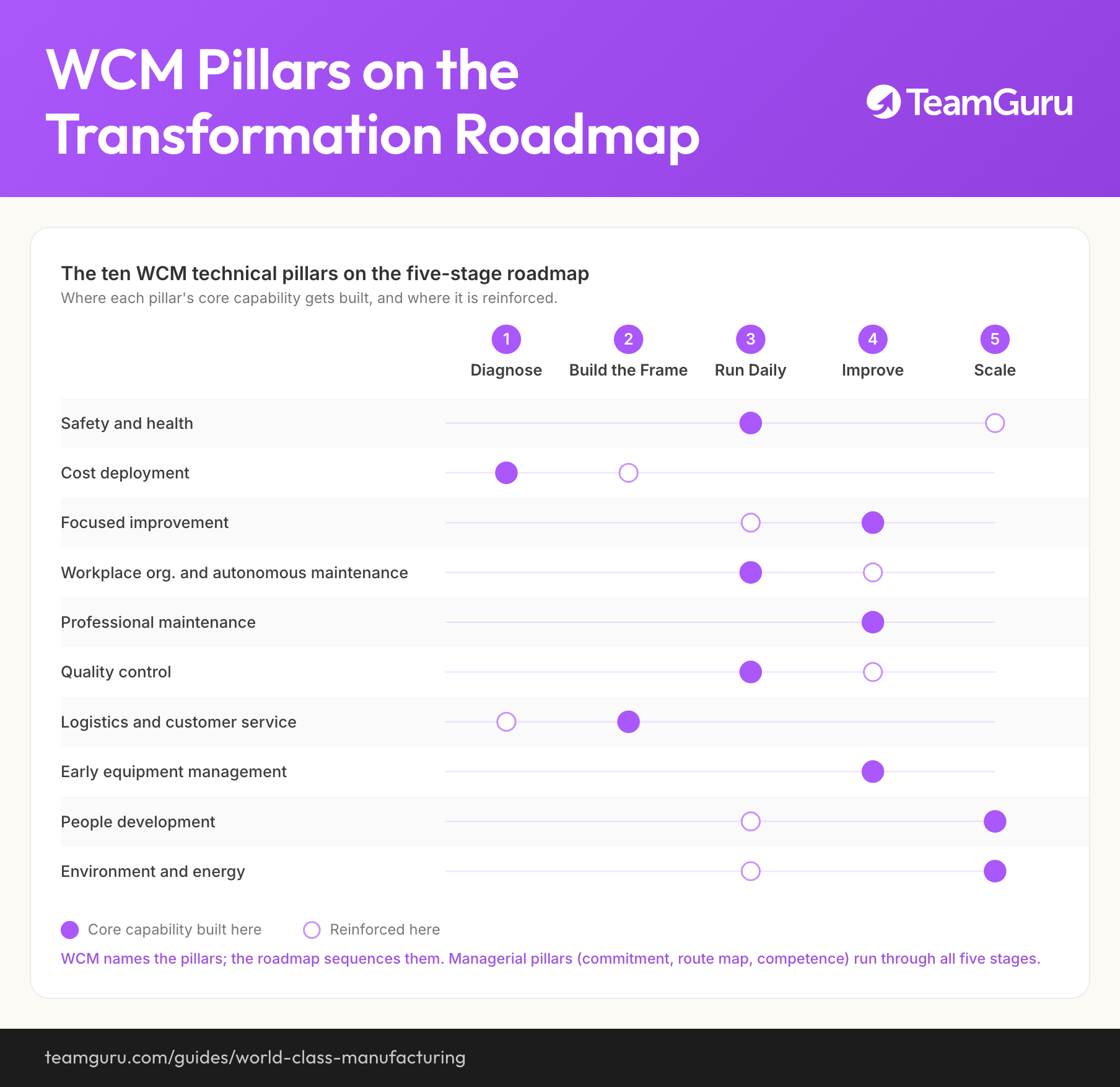
W większości materiałów o WCM jest luka, którą warto nazwać wprost: listy filarów mówią, czego potrzebuje zakład klasy światowej, i milczą o tym, co zbudować najpierw. Uruchomienie wszystkich dziesięciu filarów naraz to najczęstszy i najdroższy sposób na porażkę. Poniższa kolejność buduje filary zgodnie z ich zależnościami, według tej samej pięcioetapowej roadmapy (Diagnose, Build the Frame, Run Daily, Improve, Scale), która porządkuje wszystkie przewodniki w tym zbiorze.
1. Diagnose: najpierw Cost Deployment
Najpierw kompas samego WCM. Zmapuj strumień wartości, przejdź przez zakład z siedmioma marnotrawstwami w ręku i ustal bazowe KPI, którym da się ufać. To jest Cost Deployment w praktyce: straty zlokalizowane, wycenione i uszeregowane, dzięki czemu każdy późniejszy filar bierze się za udowodnione straty, a nie za opinie.
2. Build the Frame: cele i mapa drogowa programu
Tu rozstrzyga się los filarów zarządczych. Zamień diagnozę w kilka celów przełomowych metodą Hoshin Kanri i skaskaduj je przez proces catchball, aż każdy poziom zobowiąże się do celów, które sam współtworzył. W tym miejscu jasność celów i mapa drogowa przestają być kryteriami audytu i stają się dokumentami, z których ludzie korzystają.
3. Run Daily: system, na którym stoi każdy filar
Bezpieczeństwo, organizacja stanowiska i kontrola jakości utrzymają się tylko wtedy, gdy trzyma je codzienne zarządzanie: tablice SQDIP, spotkania Tier, 5S, standaryzacja pracy oraz ustrukturyzowane rozwiązywanie problemów metodą 5 Why i analizą przyczyn źródłowych (RCCA). Zakład, który wyłapuje odchylenia tego samego dnia, zbudował dokładnie ten fundament, którego naprawdę szuka każdy audyt.
4. Improve: filary maszynowe i jakościowe
Kiedy codzienne zarządzanie utrzymuje wypracowane efekty, zaczynają się zwracać najcięższe filary: Kaizen jako doskonalenie skoncentrowane na stratach, TPM dla autonomicznego i profesjonalnego utrzymania ruchu, SMED na przezbrojeniach, które wyciągnęła mapa strumienia wartości, oraz FMEA z Poka-Yoke, które przesuwają jakość z wykrywania na zapobieganie i wchodzą w filar Early Equipment Management.
5. Scale: rozwój ludzi i powielanie
Ostatnie filary zamieniają dobry zakład w system, który sam się odtwarza: Obeya, czyli pokój, w którym kierownictwo przegląda całą działalność, matryce kompetencji, dzięki którym rozwój pracowników daje się mierzyć, audyty warstwowe procesu, dzięki którym standard z papieru nie rozjeżdża się z praktyką na hali, oraz Yokoten, żeby przenosić sprawdzone rozwiązania na inne linie i do innych zakładów. To jest ten poziom rozprzestrzenienia, który oceniają filary zarządcze.
Prowadzony w tej kolejności WCM przestaje być dwudziestoma równoległymi strumieniami pracy i staje się jednym systemem budowanym warstwami. Dokładnie to praktyka po praktyce rozpisuje pełna roadmapa transformacji. Zakłady, które przechodzą tę sekwencję na tablicach suchościeralnych i w arkuszach, prędzej czy później uderzają w tę samą ścianę: kaskada KPI, spotkań, działań, audytów i kompetencji przerasta to, co papier zdoła spiąć między zmianami i lokalizacjami. Ta spinająca warstwa, czyli system zarządzania pod filarami, to ta część WCM, z myślą o której powstał TeamGuru.
Zabierz to ze sobą
Diagram z tego przewodnika jako obraz do swobodnego wykorzystania na wewnętrznych szkoleniach i warsztatach.
Pobierz PNGNajczęstsze pytania
Czym jest World Class Manufacturing w prostych słowach?
Kto stworzył World Class Manufacturing?
Jakie są filary WCM?
Czym WCM różni się od Lean Manufacturing?
Ile trwa dojście do poziomu world class?
Czy WCM jest jeszcze aktualny, czy zastąpiło go coś innego?
Jak to wygląda w TeamGuru